


How to find a reliable automatic wire cutting machine manufacturer
 Oct 27, 2026|
 View:3
Choosing a reliable automatic wire cutting machine manufacturer comes down to a repeatable seven-step evaluation process. First, define your requirements. Second, research and shortlist candidates. Third, evaluate machine specifications. Fourth, verify compliance. Fifth, assess total cost of ownership. Sixth, audit the factory and check references. Seventh, make the final selection. Each step includes specific criteria and questions. You can compare every supplier on equal footing. This structured approach removes guesswork from your decision. It also protects your production line from avoidable risk. Apply the same checklist to every candidate. You will see clear differences in capability, documentation, and support. The process works for any budget and any wire processing application.
Key Takeaways
Define your wire types, cut lengths, and production targets before you contact any supplier.
Research and shortlist at least three manufacturers, then screen them for capability and responsiveness.
Evaluate machine specifications, request compliance documents, and test samples on your own wire.
Calculate total cost of ownership, audit the factory, and check customer references.
Score suppliers on the same criteria and negotiate terms with a factory acceptance test.
Define Requirements and Application Fit
Specify Wire Types and Cut Lengths
Build a written wire list before you contact any supplier. Record each wire type, its diameter or cross-sectional area, the insulation material, and every cut length your production runs require. Add the strip length at each end and note any twisting or tinning steps. This document becomes the baseline for every quote you request.
A clear wire list exposes gaps in a supplier's range early. Consider HECHANG as a neutral example of how a lineup maps to applications. The HC-608 series handles big cables up to 240mm². The HC-515 series covers wires from 0.1–10mm². Specialized machines serve flat cables, multi-core cables, and stripping and twisting work. Match your list against each candidate's range and confirm the overlap covers your full mix.
Set Throughput and Tolerance Targets
Set throughput and tolerance targets that prioritize flexibility, safety, and high performance. Your targets should reflect real production demand, not a single peak order. Use published figures as reference points during supplier discussions.
Application | Throughput Target | Tolerance Target |
|---|---|---|
Servo-driven high-speed stripping (general industrial) | 700–900 pcs/hr | Length accuracy ≤0.2% |
Automotive/EV (IPC/WHMA-A-620) | — | Strip length ±0.3 mm; 3–5 mm exposed conductor |
Automotive and EV work also carries pull-off force requirements under IPC/WHMA-A-620, such as 58 N for 20 AWG and 222 N for 14 AWG. State these targets in your requirement document. Ask each supplier to confirm the machine meets them on your actual wire samples. A machine that hits the number on paper may still fall short on your insulation type. Sample testing settles the question before money changes hands.
Research and Shortlist Manufacturers
Find Credible Candidates
Start your search across several channels. B2B platforms such as IndiaMART let you compare prices and specifications and request bulk quotes from multiple suppliers at once. User forums such as Reddit's r/manufacturing give you firsthand recommendations from people who already run these machines. Trade shows and industry directories add another layer. You can meet suppliers face to face and see equipment in motion.
Gather more names than you need. A wide initial pool protects you from settling on the first automatic wire cutting machine you find. Record the source of each lead. A referral from a forum user carries different weight than a paid listing. This note helps you judge credibility later.
Screen for Capability
Screen every candidate against three filters. First, check the product range. Confirm the supplier builds machines that cover your wire list from the previous step. Second, look at years in business. A long track record suggests stable operations and spare parts support. Third, test responsiveness. Send a technical question about your specific wire types and tolerances. Note how quickly and how precisely the supplier answers.
A vague reply to a technical question is a warning sign. A supplier who asks follow-up questions about your insulation material or cut lengths shows real engagement. Keep a simple log of each response. Compare candidates on the same criteria. Cut the list to three or four suppliers who pass all three filters. These finalists move forward to the specification review.
Evaluate Automatic Wire Cutting Machine Specifications
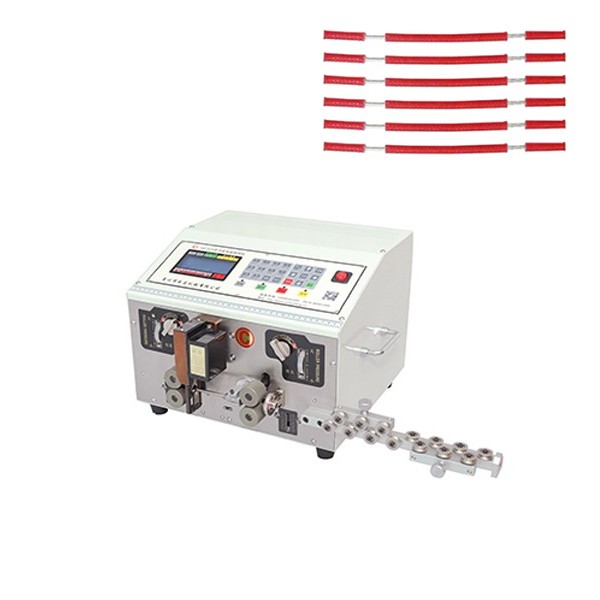
Compare Core Specs and Demos
Start with three specification criteria that decide daily performance. First, check programmable cutting lengths. The control should store your full wire list and recall each job without manual re-entry. Second, confirm repeatable processing. Ask how the machine holds length and strip accuracy across a long production run, not just on the first piece. Third, look for automated quality control. Features that detect missed cuts or incomplete strips stop defects before they reach assembly.
Paper specs only tell part of the story. Review video demonstrations that show the machine running wire similar to yours. Read independent reviews from owners who run the same model in production. Buyers commonly compare specs from multiple manufacturers such as Eraser, Carpenter, Metzner, and Eastontech, so treat each datasheet as one data point among several. A short sample test on your own wire settles more questions than any brochure. Confirm the automatic wire cutting machine handles your smallest and largest wire without changeover problems.
Confirm Compliance and Safety
Request compliance documents before you sign anything. These papers prove the supplier meets recognized quality and safety standards. The table below lists the core items to collect.
Category | Item | Details / Purpose |
|---|---|---|
Compliance Document | CE marking | Machine assessed against Machinery Directive 2006/42/EC and relevant EN standards |
Compliance Document | ISO 9001 | Certified quality management system |
Compliance Document | ISO 14001 | Certified environmental management system |
Compliance Document | ISO 45001 | Certified occupational health & safety management system |
Safety Feature | Remote operation technology | Allows operators to control cutting from a safe distance, reducing exposure risk |
Safety Feature | Emergency stop systems | Integrated and accessible from multiple control points |
Safety Feature | Redundant communication networks | Maintains operational control even if the primary system fails |
Safety Feature | Continuous monitoring cameras | Multiple high-definition cameras with recording for safety verification |
Safety Feature | Waterless cutting technology | Eliminates contamination spread through liquids |
Three credentials carry the most weight in a supplier review:
ISO 9001 — quality management system certification
CE marking — confirms compliance with European safety requirements
TUV certification — provides additional third-party product safety verification
These credentials satisfy both North American and European regulatory requirements. They reduce procurement risk and help you avoid costly retrofitting to meet local codes. Verify each certificate's scope covers the model you plan to buy. Check the emergency stop layout on the actual machine during your demo. A compliant automatic wire cutting machine protects your operators and your schedule.
Assess Cost, Audits, and References
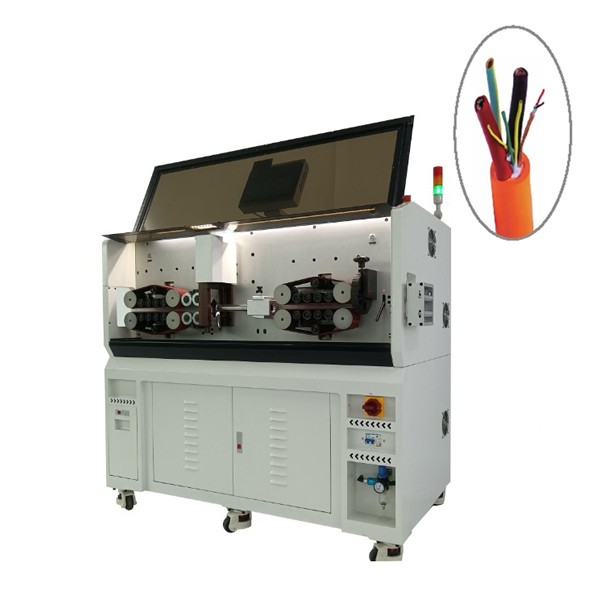
Calculate Total Cost of Ownership
The purchase price is only one line in your cost model. Build a full total cost of ownership picture before you compare quotes. Start with the purchase price and the cost of consumables such as blades, belts, and guides. Estimate maintenance spending over the machine's expected service life. Add the cost of downtime, because every hour of lost output carries a real price for your operation. Include operator training and the availability of spare parts. A machine with cheap spare parts that arrive slowly can cost more than a machine with pricier parts kept in local stock.
Ask each supplier for a written consumables schedule and a spare parts list with lead times. Request the recommended maintenance interval and the typical cost of a service visit. Compare these figures side by side across your shortlist. A low sticker price often hides higher running costs. The automatic wire cutting machine that wins on total cost usually offers predictable consumables, fast parts delivery, and simple maintenance.
Audit the Factory and Check References
An audit confirms that the supplier can actually deliver what the brochure promises. Visit the factory when possible, or request a live video walkthrough. Use a checklist that covers three areas.
Audit Area | What to Verify |
|---|---|
Production equipment | Working machines, assembly lines, and calibration tools in active use |
Quality process | Documented inspection steps, traceability records, and defect handling |
Testing capability | Sample cutting and stripping tests run on customer wire types |
Watch how the factory handles a test cut on your own wire sample. A supplier who runs the test openly and explains each step shows confidence in the product. Ask to see the quality records for a recent build. These records reveal whether inspection happens on every unit or only at random.
Reference checks complete the picture. Ask each supplier for two or three customers who run similar wire types. Call those references and ask direct questions. What is the machine's actual uptime in daily production? How fast does the service team respond to a breakdown? Which failure points appear most often, and how does the supplier resolve them? Listen for specific answers. A reference who speaks in general praise offers little value. A reference who names a real problem and describes the fix gives you useful information. Compare the answers across suppliers. Consistent themes, good or bad, tell you what to expect after the contract is signed.
Make the Final Selection
Score Suppliers Against Criteria
A weighted scoring matrix turns your shortlist into a clear ranking. Score each supplier on technical fit, compliance, cost, and support. Assign weights that reflect your operation. A framework from an analogous tube-forming supplier selection study offers a starting point: quality certifications and compliance at 25%, technical expertise and equipment at 20%, and total cost and pricing transparency at 15%. The source does not provide weights specific to automatic wire cutting machines, so adjust these figures to your priorities.
Criterion | Assigned Weight | Rationale |
|---|---|---|
Quality Certifications and Compliance | 25% | Validates documented quality systems and regulatory commitment |
Technical Expertise and Equipment | 20% | Advanced capabilities determine achievable geometries |
Total Cost and Pricing Transparency | 15% | Ensures value beyond initial quotes |
Score every supplier on the same scale. Multiply each score by its weight and add the results. The highest total identifies your preferred supplier. Review the scores with your team before you commit.
Negotiate Terms and Acceptance Testing
Read the warranty terms closely. Many contracts pass through only the warranties the seller received from its own material suppliers. Sellers often exclude implied warranties of merchantability and fitness for a particular purpose. Liability may be capped at the price of the goods. Ask for the coverage schedule in writing. Typical terms include one year on installation workmanship, five years on low-voltage cabling installed inside walls, ceilings, or floors, and 30 days on service-call workmanship. Confirm which parts the service agreement excludes, such as consumables, motors, and equipment damaged by misuse.
Build a factory acceptance test into the contract. Run your own wire samples through the machine before shipment. Verify cut length, strip quality, and throughput against your requirement document. Add a spare parts commitment with stated lead times and an after-sales service agreement covering response time. Sign only after the test passes.
You now have a seven-step path from defining requirements through final selection. Define your wire list and targets, research and shortlist candidates, evaluate specifications and compliance, weigh total cost of ownership, audit the factory, check references, and negotiate terms with acceptance testing. This criteria-based approach shields you from downtime, compliance gaps, and hidden costs. Unplanned stoppages can cost a mid-sized facility $22,000–$50,000 per hour, so a careful supplier review pays for itself. Apply the checklist to at least two or three shortlisted manufacturers before you commit. Compare their scores side by side. The differences will guide a confident, defensible decision.
FAQ
What information should you send with a quote request?
Send your wire list, cut and strip lengths, tolerance targets, and expected throughput. Include insulation materials and any twisting or tinning steps. A complete request lets suppliers quote accurately and shows which candidates read your requirements carefully.
Can you test a machine on your own wire before buying?
Yes. Ask for a sample test on your smallest and largest wire. Compare cut length, strip quality, and throughput against your requirement document. A supplier who runs the test openly and explains each step demonstrates confidence in the machine.
How do you verify ISO 9001 and CE certificates?
Check that each certificate's scope covers the exact model you plan to buy. Confirm the issuing body and the certificate's validity dates. Ask the supplier for the full document, not a logo on a brochure. Valid credentials reduce procurement risk.
What warranty and service terms should you expect?
Ask for the coverage schedule in writing. Typical terms include one year on installation workmanship and 30 days on service-call workmanship. Confirm which parts the agreement excludes, such as consumables and motors. Add a spare parts commitment with stated lead times.
How many suppliers should you compare before deciding?
Compare at least two or three shortlisted manufacturers. Score each one on the same weighted criteria: technical fit, compliance, cost, and support. Side-by-side scores reveal real differences in capability and backup, and they give you a defensible record of the decision.


View More(Total0)Comment lists