


Harness Assembly Machine vs Manual Assembly: Which Is Better for Manufacturers
 Oct 14, 2026|
 View:11
Machine or manual assembly for wire harnesses? The answer depends on production volume, budget, and quality requirements. Machines suit high-volume, consistent production. Manual assembly suits low-volume, custom, or prototype work.
Branch points and formboard routing still favor manual work. Cutting, stripping, and crimping favor machines. A harness assembly machine delivers repeatable results at scale. Skilled hands adapt faster to change.
Cost, speed, quality, flexibility, scalability, and labor all shift the decision. Each factor carries different weight for every manufacturer. The right match comes from an honest look at current operations and future demand.
Key Takeaways
Machines excel at high-volume, consistent production. Manual assembly suits low-volume, custom, or prototype work.
Automate cutting, stripping, and crimping for speed and quality. Keep routing and branch points manual for flexibility.
A harness assembly machine pays for itself in 12 to 24 months with high volume and stable designs.
Manual assembly adapts quickly to design changes. Machines need reprogramming and setup time.
Hybrid setups combine automated front-end steps with skilled manual work for the best results.
Cost: Harness Assembly Machine vs Manual
Upfront Investment and Operating Costs
Manual assembly demands very little capital. A manufacturer buys hand tools, a formboard, and basic test equipment. The barrier to entry stays low. That low barrier hides a rising cost over time. Every harness carries the labor hours built into it. Wages, benefits, and training add up with each unit shipped.
A harness assembly machine flips that equation. The buyer pays a large sum at the start. Equipment, installation, and operator training all land in the first budget cycle. After that, the per-unit cost falls. The machine does not take breaks, and it does not slow down on the third shift.
The table below shows how the two methods compare across the main cost categories.
Cost Category | Manual Assembly | Harness Assembly Machine |
|---|---|---|
Upfront investment | Low | High |
Labor cost per unit | High and rising | Low at volume |
Tooling and fixtures | Minimal | Included in purchase |
Cost at low volume | Lower total | Higher total |
Cost at high volume | Higher total | Lower total |
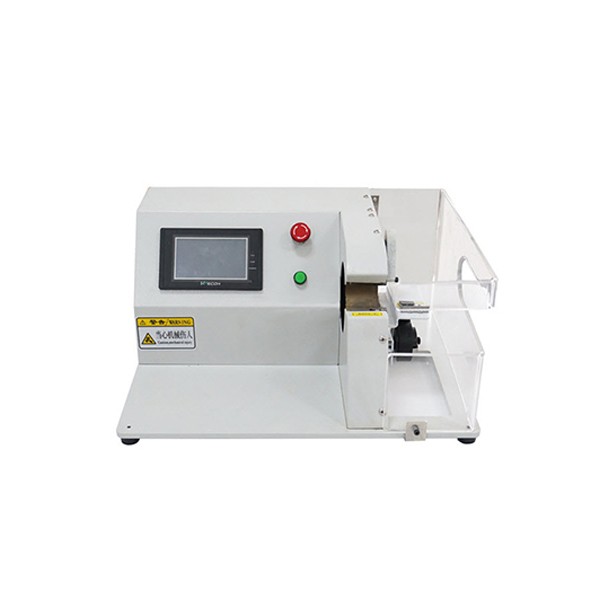
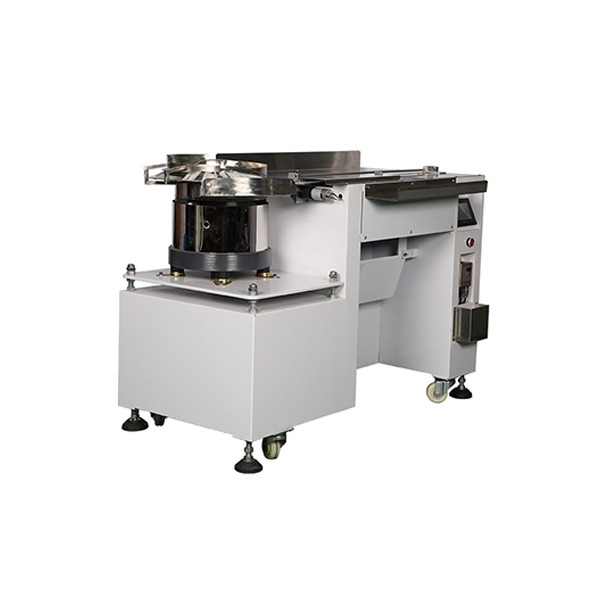
Changzhou Hechang Intelligent Technology Co., Ltd. supplies equipment across the full assembly chain. The company builds tube cutting, heat shrinking, wire winding and bundling, ultrasonic welding, and wire taping machines. Its catalog includes the HC-100 heat shrink tube cutting machine, the HC-602 and HC-605 corrugated tube cutting machines, the HC-210 and HC-210+Z wire winding machines, and the HC-290 automatic belt bundle wire machine. The HC-NLM automatic nut tightening machine, the HC-5A30, HC-8A30, HC-18A45, and HC-40A80 series, the HC-650S and HC-600B heat shrinkable tube heaters, and the HC-30 semi automatic taping machine round out the lineup. A manufacturer can automate one step at a time instead of replacing the whole line at once.
When a Harness Assembly Machine Pays Off
Payback depends on volume, wire mix, and shift pattern. Industry averages put the typical payback period for a harness assembly machine investment at 12 to 24 months. That benchmark pairs with annual savings of roughly 25 to 45 percent and labor-cost reductions above 50 percent. High-volume repetitive harness families recover the investment fastest. Stable designs and long runs give the machine time to earn back its price.
Low-volume work tells a different story. A shop that builds fifty custom harnesses a month will not reach that payback window. The machine sits idle between jobs. Manual assembly wins on cost at low volume because the manufacturer pays only for the hours actually worked.
The crossover point arrives when labor hours per unit stay high and order volume stays steady. At that stage, the machine wins on cost. Below it, manual assembly wins. A manufacturer should map annual volume against design stability before signing a purchase order.
Speed and Efficiency: Throughput Compared
Cycle Times and Output Rates
A harness assembly machine outperforms manual assembly on raw output. Machines deliver more harnesses per hour than people can produce by hand. Automated tracking also ensures every part meets specification. The machine does not tire, and it does not lose focus during a long shift.
The initial steps of wire harness assembly favor automation. Cutting, stripping, and crimping happen faster and more consistently on a machine than under human hands. A machine repeats the same cut length and strip depth thousands of times without drift. Crimp force monitoring catches bad terminations before they leave the station. These front-end operations set the pace for the rest of the line. When they run fast and clean, downstream work flows without interruption.
Fully automated cable assembly is economical only for high-volume, low-mix, straight-path products such as USB or Ethernet cables. Those products have linear topology. A machine can cut, strip, crimp, and even insert connectors without human intervention. Output rates climb, and unit costs fall.
Where Manual Still Keeps Pace
Board work tells a different story. Wire harness configurations are geometrically complex. Each harness branches, uses varying wire lengths, and follows 3D routing paths. Routing, binding, and formboard assembly remain predominantly hand-built. Current robotic systems cannot replicate these paths reliably at production cost.
Manual formboard assembly uses 1:1 layout boards to guarantee exact breakout lengths and connector positioning for drop-in fit. Complex breakouts—managing multiple branch points to route power and signals to different areas—are handled during this manual routing and bundling stage. Skilled technicians bring accumulated knowledge to each build. That tribal knowledge is a genuine competitive asset.
EMSTech distinguishes cable assemblies from wire harnesses. Cable assemblies have linear topology. Wire harnesses have branching topology with a main trunk and sub-trunks at defined breakout points. Because of this branching, wire harnesses require more manual labor, especially at branch points and during formboard routing. Linear cable assemblies can be automated to a much greater degree.
Semi-automated production uses machines for cutting, stripping, and crimping, but assigns manual technicians to routing, connector insertion, and protective covering. Manual skilled technicians are explicitly responsible for harness routing on formboards, breakout point assembly, and final visual inspection. Current automation cannot replicate these tasks cost-effectively. Manual work remains the practical choice at branch points and formboards.
The speed verdict breaks down by stage. Machines win on cutting, stripping, and crimping. Manual assembly wins on board work, branch points, and routing. A manufacturer who needs both speed and flexibility often combines the two approaches. A harness assembly machine handles the repetitive front-end steps. Skilled hands handle the complex routing that follows.
Quality and Consistency: Error Rates and Repeatability
Defect Rates and Rework
Harness quality determines whether an electrical system stays stable or develops recurring field issues. In industrial automation, aerospace, medical devices, and OEM equipment, harness quality directly influences reliability, lifecycle cost, and overall performance. A minor crimping or routing defect can cause system failure. In aerospace and defense, that failure halts operations. In medical devices, the consequences are more severe. Rework increases labor time, scrap material, shipping expenses, and warranty exposure.
A harness assembly machine reduces variability in cutting, stripping, and crimping. The machine repeats the same motion with the same force thousands of times. Manual work introduces human error at these stages. However, manual assembly allows in-process inspection. A skilled operator can spot a loose terminal or a misrouted wire before the harness leaves the board. Machines need separate inspection stations to catch the same defects.
Testing protocols protect both methods. Continuity testing, insulation resistance testing, Hipot testing, pull tests, vibration testing, thermal cycling, salt spray, and humidity tests verify reliability across conditions. Global standards such as IPC/WHMA-A-620, ISO 9001, IATF 16949, and AS9100 provide quality assurance and market access. For repeatable, high-volume work, the machine wins on quality. For custom or low-volume work, manual assembly wins because trained eyes catch what fixed programs miss.
Tracking Manual and Automated Steps
Wire harness manufacturing is labor-intensive. Software must track manual assembly steps, not just automated machinery. ERP and MES platforms link each finished harness to raw-material lots, the operator, the testing station, and the packing batch through serial and lot relationships. In-process quality checkpoints record crimp pull, continuity, high-voltage, and visual inspections with OK/reject split and root-cause classification.
Automated stations report production, rejects, downtime, and work-in-progress in real time. Revision and change control keep only approved routing and component versions active on the line. This prevents old parts from reaching machines or operators. Computer vision on form boards observes operators and flags pauses on complex routes. Digital SOPs deliver the correct diagram to a tablet and record each completed action for an audit-ready history.
Traceability standards raise the bar further. ISO 13485:2016 certified production aligns the workflow with medical-device quality expectations. IPC/WHMA-A-620 Class 3 applies to high-reliability applications where failure is unacceptable. AS9100D provides documentation from raw material receipt through final inspection and shipment. Full material-to-shipment traceability keeps records across the entire manufacturing cycle.
Flexibility and Customization: Handling Design Changes
Changeovers and Low-Volume Runs
Manual assembly adapts quickly to design changes, custom harnesses, and prototype runs. A new revision arrives. The technician reads the updated drawing and adjusts the formboard. Production restarts within hours. No reprogramming step exists. No fixture purchase delays the build.
A harness assembly machine follows a fixed program. A design change forces an engineer to rewrite parameters, verify the new setup, and run first-article checks. That changeover consumes time and engineering hours. Low-volume runs amplify the penalty. A shop that builds ten prototype harnesses gains nothing from automated speed. The setup cost outweighs the runtime savings.
Shorter and smaller harness sections are easier for machines to manufacture and handle. A simple jumper wire with two terminals suits automated cutting, stripping, and crimping. The machine completes the part in one pass. Complex harnesses with multiple breakouts do not fit that model. Manual assembly wins on flexibility for custom and prototype work. Machines win on flexibility only within a narrow band of simple, stable designs.
Why Manual Wins at Branch Points
Wire harnesses require more manual labor, particularly at the branch points and at the routing steps. Individual wires must be positioned on a formboard. Each wire follows a defined path from the main trunk to a sub-trunk. The technician places every conductor by hand. Breakout lengths must match the drawing exactly. A drop-in fit depends on that precision.
Current automation cannot replicate these tasks cost-effectively. Robotic systems struggle with the 3D routing paths inside a branching harness. The geometry changes with every new design. A machine built for one layout cannot handle the next one without a rebuild.
Manual assembly wins on flexibility. Skilled technicians handle design changes, branch points, and formboard routing without new capital investment. A manufacturer with mixed production should automate the front-end steps and keep board work in human hands.
Scalability: Growing Production Without Growing Pains
Ramping Up Volume
A harness assembly machine scales by adding capacity. A manufacturer can run a second shift, raise line speed, or install another unit. Output rises without a proportional rise in headcount. The same equipment keeps producing at the same cycle time. Growth becomes a capital decision, not a hiring race.
Manual assembly scales by hiring and training more operators. Each new worker needs a station, tools, and supervision. Training takes weeks before output reaches target. Quality varies across a larger crew. A shop that doubles its orders must double its bench space and its payroll. That path works, but it strains management and consistency.
Matching Equipment to Production Scale
Equipment selection starts with an honest review of production scale and harness complexity. A manufacturer should check automation grades, precision functions, and compliance standards before committing. The table below maps the main criteria to the questions a buyer should answer.
Selection Factor | Question to Answer |
|---|---|
Production scale | What annual volume must the line support? |
Harness complexity | Does the design branch, or run straight? |
Automation grade | Which steps need full automation? |
Precision functions | What tolerances must the machine hold? |
Compliance standards | Which certifications does the market require? |
A manufacturer can phase the investment. Automated cutting, stripping, and crimping handle the front end first. Board work stays manual until volume justifies more. This staged approach limits risk and matches spending to demand.
Machines win on scalability. They add output through capacity and shifts. Manual assembly adds output through people, and that path grows slower and costlier at volume. A manufacturer with rising, stable demand should plan around a harness assembly machine.
Labor Considerations: Skills, Training, and Workforce
Staffing Needs and Skill Requirements
Operators require less specialized instruction when they run a harness assembly machine. The equipment handles the complex motion. A new hire learns to load material, start the cycle, and check output. That short learning curve lets a manufacturer place workers on the line faster. Efficiency rises because the machine carries the precision burden.
Manual assembly depends on skilled workers. Wire harness assembly ranks among the most labor-intensive manual processes in manufacturing. The core skill is flexible cable routing on formboards. This task demands manual dexterity and adaptability. Cables are deformable and have infinite degrees of freedom. That property makes the work difficult to automate. Upstream tasks such as cutting, stripping, and crimping are already fully automated. The remaining manual skill demand concentrates on routing and placement steps.
Hiring for these roles is becoming increasingly difficult. Labor costs continue to rise. Production targets keep increasing, which intensifies pressure on manual assembly staffing. Automation responds to this pressure by reducing labor dependency and easing operator management.
Training Time and Operator Efficiency
Training time differs sharply between the two methods. A machine operator reaches target output within days. The machine sets the pace, and the operator follows a fixed routine. Consistency comes from the equipment, not from years of practice.
Manual assembly training takes longer. A cable harness builder must learn routing paths, breakout lengths, and connector placement. Workers often need three to seven years to adapt and specialize. Some move into aerospace or defense harnesses. Others transition to field installation trades. That long ramp raises cost and risk for the employer.
The labor verdict depends on production type. Machines win on labor for high-volume production. They cut dependency on scarce skilled workers and stabilize output. Manual assembly wins for custom production. Skilled hands handle the routing and branch work that machines cannot replicate. A manufacturer with mixed demand should pair automated front-end steps with a trained manual team on the board.
No single method wins every shop. Volume, budget, quality targets, and customization needs decide the answer. Machines serve high-volume, repeatable production. Manual assembly serves low-volume, custom, or prototype work. Hybrid setups handle mixed production best.
Choose a harness assembly machine when volume is high and designs stay stable. Choose manual assembly when volume is low and designs change often. Before investing, weigh floor space, current capacity, bend behavior, the production environment, and total installed cost.
Evaluate current and future production needs before committing. The right choice today should still fit the shop tomorrow.
FAQ
What Annual Volume Justifies a Harness Assembly Machine?
Volume alone does not decide the crossover point. Design stability matters equally. High-volume, repeatable harness families recover the investment fastest. Low-volume custom work favors manual assembly. A manufacturer should map annual volume against design stability first.
How Quickly Does a Harness Assembly Machine Pay for Itself?
The payback period for a harness assembly machine averages 12 to 24 months. Annual savings typically range from 25 to 45 percent. Labor costs can drop by more than half. Stable designs and long production runs accelerate the return.
Can a Manufacturer Automate Only Part of the Line?
Automated cutting, stripping, and crimping handle the front-end steps. Board work, branch points, and routing remain in human hands. This staged approach limits initial risk. A manufacturer can phase equipment purchases over time.
What Quality Standards Apply to Wire Harness Manufacturing?
IPC/WHMA-A-620 covers cable and wire harness assembly requirements. ISO 9001 governs general quality management. IATF 16949 applies to automotive production. AS9100D serves aerospace and defense. Medical device work may require ISO 13485:2016 certification.
How Long Does Manual Assembly Training Take?
Machine operators reach target output within days. Manual cable harness builders need three to seven years to adapt and specialize. Skilled routing and branch work demands far more training than machine operation.


View More(Total0)Comment lists