


How to select the right harness assembly machine for your cable manufacturing business
 Sep 09, 2026|
 View:259
Is your current wire processing bottleneck limiting your order fulfillment? You watch orders pile up while your line struggles to keep pace. Choosing the wrong harness assembly machine leads to costly downtime and quality rejections. This article provides a practical framework for evaluating equipment based on your production mix, quality requirements, and budget.
You will learn about automation levels, compliance standards, and total cost of ownership—not just the purchase price. These factors determine long-term profitability. By the end, you will have a clear checklist for requesting quotes from suppliers like Hechang or other manufacturers. Use this framework to compare options objectively. Make your next equipment decision with confidence, knowing you evaluated every critical factor.
Key Takeaways
Categorize your harnesses by type and volume before comparing machine specs.
Choose semi-automatic machines for small batches and full automation for high volume.
Confirm the machine includes in-line testing for crimp force and continuity.
Calculate total cost including maintenance and downtime, not just the purchase price.
Assessing Your Production Volume and Harness Complexity
Before you evaluate any equipment, you must understand what you produce. Every harness assembly machine excels at specific tasks. The wrong match creates bottlenecks that no amount of operator effort can fix. Start by classifying your products into clear categories.
Categorizing Harness Types and Connector Requirements
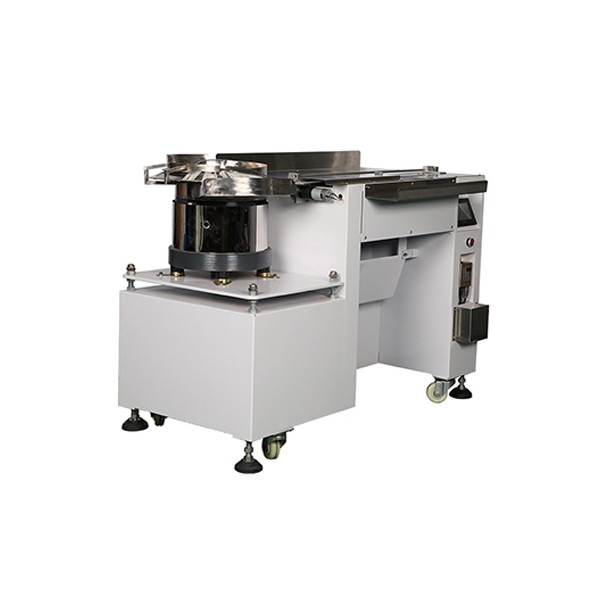
Simple power cords and USB cables share similar characteristics. They have few branches, standard connectors, and straightforward termination points. These products suit high-speed automated processing. Hechang's HC-210 Automatic Binding Wire Winding Machine handles AC/DC power cords, USB cables, video lines, and HDMI cables with ease. This machine delivers consistent results for simpler, high-volume products.
Complex data cables present different challenges. Multiple branches, mixed connector types, and shielding requirements demand flexible equipment. You might need machines that handle varying wire gauges or accommodate specialized termination methods. Consider your connector mix carefully. Each connector type requires specific tooling, feeding mechanisms, and quality checks. A machine that handles one connector family may struggle with another.
Create a product matrix listing your current harness types. Note the wire gauge range, number of terminations, branch count, and connector families. This matrix becomes your specification baseline. When you compare quotes from different manufacturers, you can evaluate each machine against your actual product mix rather than generic capabilities.
Matching Machine Throughput to Your Batch Sizes
Your daily order volume determines the throughput you need. Calculate your required cycle time by dividing available production hours by daily output targets. For example, if you need 2,000 harnesses per day across one eight-hour shift, your line must produce 250 units per hour. This calculation reveals whether semi-automatic or fully automatic equipment makes sense.
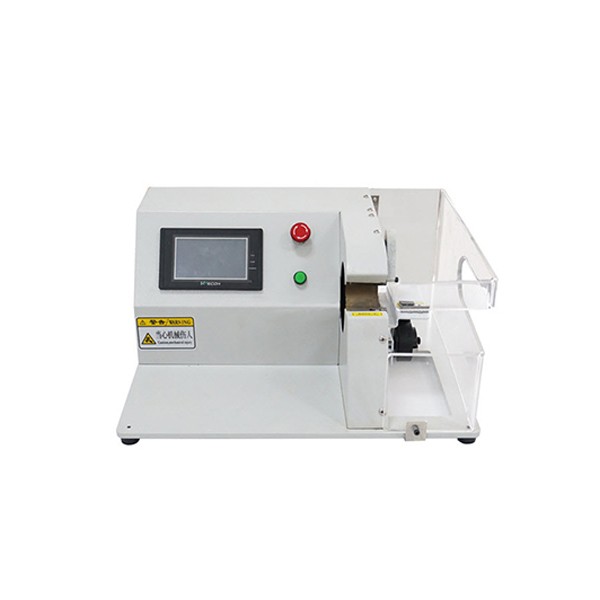
Low-volume, high-mix production demands flexibility over raw speed. Semi-automatic machines like Hechang's HC-30 taping machine allow operators to switch between product types quickly. Changeover time matters more than cycle time when you run many small batches. An operator-fed machine also gives you visual inspection opportunities during assembly.
High-volume, standardized products justify fully automatic lines. The HC-210+Z Full Automatic Wire Winding and Cable Tie Machine processes USB, AC, and DC wires continuously without operator intervention. This automation reduces labor costs per unit and ensures consistent packaging quality. The trade-off involves longer changeover times when you switch products.
The wire harness assembly machine market reflects this growing demand for automation. Industry projections show the sector expanding at a compound annual growth rate of 11.2 percent between 2026 and 2033. Near-term expectations suggest 6 to 8 percent annual growth, with market value reaching approximately $1.5 billion by 2028. This expansion signals increasing adoption of automated solutions across manufacturing segments.
Match your batch size profile to the appropriate automation level. If your orders fluctuate between 50 and 500 units, semi-automatic equipment offers better utilization. If you consistently produce thousands of identical units, invest in full automation. Consider your future order pipeline as well. A machine that handles today's volume but cannot scale with your growth creates a new bottleneck tomorrow.
Evaluating Harness Assembly Machine Automation Levels
Automation level determines how much labor your line consumes and how consistent your output stays. You face a fundamental choice: semi‑automatic systems that rely on operator feeding, or fully automatic lines that run continuously with minimal intervention. Each option serves a different production profile, and selecting the wrong one creates either excess labor cost or underutilized capital.
Comparing Semi-Automatic vs. Fully Automatic Systems
Semi‑automatic machines require an operator to load wires, position components, and activate each cycle. These systems suit low‑volume, high‑mix environments where changeover flexibility matters more than raw speed. Operator involvement also provides a visual inspection step, catching defects before they accumulate. However, consistency relies on operator skill, and throughput is limited to the operator’s pace.
Fully automatic systems, by contrast, feed wire continuously and execute all assembly steps without manual intervention. They operate up to 15 times faster than manual labor, which translates directly into lower labor cost per unit. The processing speed of fully automatic lines often reaches hundreds of strips per minute, while semi‑automatic units typically produce 150–500 strips per minute. Conductor damage rates drop below 1% on fully automatic equipment, compared to under 3% on semi‑automatic units. The table below summarizes these differences.
Equipment Level | Upfront Cost Range | Processing Speed | Conductor Damage Rate |
|---|---|---|---|
Semi‑Automatic Units | $800 – $15,000+ | 150–500 strips/min | Under 3% |
Fully Automatic Lines | Higher than semi‑automatic | Up to 15× manual speed | Under 1% |
The payback period for either investment follows a simple formula: payback period equals total capital investment divided by net annual operating savings. For high‑volume facilities that run thousands of identical harnesses daily, the labor savings alone often recover the full investment within a few months. If your batch sizes exceed 500 units regularly and changeover frequency remains low, fully automatic equipment delivers faster payback.
Hechang’s HC‑100 heat shrink tube cutter exemplifies a semi‑automated step that reduces material waste. It automates the single process of cutting heat shrink tubing with precise length control, freeing operators from manual measurement and repetitive cutting. Such machines are ideal when you need to automate one bottleneck without overhauling the entire line.
Reviewing Precision Features for Crimping and Cutting
Precision in crimping and cutting directly affects electrical continuity and mechanical strength. The industry‑recognized standard tolerance for crimp height is ±0.03 mm. This value keeps the conductor compression ratio within the safe process window of 15%–30%. If tolerance drifts to ±0.05 mm, actual crimp height can exit that window, causing loose connections or crushed copper cores.
For pull force, the minimum acceptable value varies by wire size. The table below lists typical requirements.
Wire Size (AWG) | Minimum Pull Force (N) |
|---|---|
30 | 8–10 N |
28 | 10–15 N |
26 | 15–20 N |
24 | 20–30 N |
22 | 30–50 N |
20 | 50–70 N |
18 | 70–100 N |
16 | 100–150 N |

To maintain these tolerances consistently, modern harness assembly machines incorporate crimp‑force monitoring. This system compares the force signature of every crimp cycle against a validated reference window. It detects missing strands, abnormal terminals, feeding errors, and other process variation in real time. As the chart illustrates, the required pull force increases substantially with wire size, making consistent monitoring essential for each gauge.
Modern crimp‑force monitoring systems inspect every crimp cycle rather than relying on sampling inspection. This shift from statistical sampling to 100% in‑process verification ensures that no defective crimp passes unnoticed, directly strengthening quality assurance.
Cutting length precision is equally important. Standard cutting tolerance sits at ±0.5 mm for most wire types, with technical specifications ranging from ±0.5 mm to ±1.0 mm. Tighter tolerances are available for critical applications such as high‑frequency cables or aerospace harnesses. Hechang’s HC‑602 and HC‑605 corrugated tube cutters deliver high‑precision cutting for tube diameters up to 35 mm. Their optional slitting feature adds versatility, making them suitable for both standard and specialty cable assembly tasks.
When evaluating a harness assembly machine, verify that crimp‑force monitoring is included and that cutting length precision meets your tightest tolerance requirement. These features directly reduce scrap, rework, and field failures.
Ensuring Quality Compliance and Traceability in Your Machine
Quality compliance begins with in-line testing built into your equipment. You cannot rely on visual inspection alone to catch defects. Modern machines include automated testing features that verify every connection during production. These features reduce scrap and prevent field failures.
Integrating In-Line Testing and Inspection Features
Your machine must include built-in continuity testing. This test detects opens, miswires, and reversals. Automated analyzers perform this check reliably. Hand probes are prohibited by NASA-STD-8739.4A for critical applications. You also need dielectric withstand voltage testing at 1050±50 Vrms or 1500±75 Vdc with leakage below 1 mA. Insulation resistance must be measured at 500 Vdc and reach a minimum of 100 MΩ. Common failures include nicked insulation, stray strands, and contamination. Your harness assembly machine should catch these issues automatically.
Crimp pull-force monitoring provides another critical layer. The machine must measure pull-out force and compare it against minimum requirements per wire gauge. For example, 20 AWG wire requires at least 58N under IPC/WHMA-A-620. The pull-off force must reach at least 90% of the wire's ultimate tensile strength. After testing, you must see no wire slippage, terminal breakage, or conductor pull-out. Re-crimping is prohibited. Visual inspection alone cannot replace this test. Class 3 applications require the highest pull-force thresholds.
Hechang's HC-NLM nut tightener illustrates how features support quality. It uses imported components to ensure consistent torque. This consistency meets automotive standards where torque variation causes failures. When evaluating equipment, confirm it includes these testing capabilities as built-in functions.
Verifying Compliance with IPC/WHMA-A-620 and ISO 9001
IPC/WHMA-A-620 is the only industry-consensus standard for cable and wire harness workmanship. It defines acceptance criteria for wire preparation, crimping, soldering, and assembly. The standard has three performance classes with progressively stricter criteria. Your customer selects the class on the drawing or purchase order.
ISO 9001 requires documented quality management systems. Manufacturers must demonstrate controlled processes from quoting through shipping. They need traceability for materials including supplier records and lot codes. Risk-based thinking requires design reviews and failure point identification. Continuous improvement demands internal audits and corrective action systems. Employee training and equipment calibration must be documented.
When evaluating suppliers, ask for documentation proving compliance. Request certificates of conformance and traceability records. Conduct periodic audits to verify processes match practices. Require IPC A-620 certification for inspectors. Established manufacturers like Hechang are more likely to have robust quality processes. These documents give you confidence in your equipment choice.
Calculating Total Cost of Ownership for Your Harness Assembly Machine
Purchase price is only the starting point. The true cost of your equipment extends far beyond the initial payment. You need a formula that captures the full picture. Total cost of ownership equals the sum of initial purchase price, installation, training, annual maintenance, and downtime costs, minus the savings from labor reduction, scrap elimination, and increased throughput. This calculation reveals the actual value of your investment.
Projecting ROI: Labor Savings, Scrap Reduction, and Maintenance
Labor savings deliver the fastest return. An automated line runs continuously without breaks. You reduce headcount per shift and eliminate overtime premiums.
Scrap reduction provides another major source of savings. Manual processes generate scrap rates between 7 and 10 percent. Precision equipment brings that number below 0.1 percent. This 99 percent relative reduction saves material costs directly. Every wire, terminal, and connector you do not scrap stays on your bottom line.
If repair cost exceeds 40 percent of replacement cost, replacement is usually the better choice.
Downtime carries hidden costs that multiply quickly. A single 4-hour repair can cascade into 8 to 12 hours of production impact. Total costs reach 5 to 15 times the direct repair cost. Automotive plants lose over $2 million per hour of unplanned downtime. The average large plant loses $129 million annually. You must factor these potential losses into your model.
Hechang's product line of harness assembly machines represents a mid-range investment. These units balance upfront cost with long-term reliability. Using imported components reduces maintenance frequency and extends service life.
Vetting the Supplier: Lead Times, Training, and After-Sales Support
The manufacturer's track record matters as much as the machine specifications. Request references from current users. Ask about their experience with installation, training, and ongoing support. A builder with commissioning experience across 30 countries demonstrates global capability.
After-sales support includes several critical elements. Confirm the supplier provides technical support, spare parts, and maintenance guidance. Ask about spare-part instruction documentation. Evaluate after-sales depth beyond the headline price. This factor prevents the number-one sourcing mistake in this segment.
Check spare parts availability before committing. Machines using imported sensors and components reduce long-term maintenance risks. You need assurance that replacement parts remain accessible for years. A supplier who stocks common spares reduces your downtime risk significantly.
Lead times affect your production planning. Ask about standard delivery schedules and expedited options. Factor installation timelines into your project plan. A machine that arrives but sits uninstalled generates no return.
You now have a four-step framework for equipment selection. First, know your production volume and harness complexity. Second, match automation level to your labor costs and quality needs. Third, verify compliance and testing capabilities. Fourth, calculate true cost of ownership including support.
The cheapest machine rarely proves most cost-effective. Create a detailed specification sheet. Request demos from at least three vendors, including specialized manufacturers like Hechang. Schedule a site visit or virtual demo to see how the machine handles your specific wire types before making a final decision.
FAQ
How do I determine if my production volume justifies a fully automatic machine?
Calculate your daily output target divided by available production hours. If you consistently produce more than 500 identical units per batch with low changeover frequency, full automation delivers faster payback. Semi-automatic equipment suits smaller batches where flexibility matters more than speed.
What certifications should I request from a harness assembly machine manufacturer?
Ask for documentation proving IPC/WHMA-A-620 compliance for workmanship standards and ISO 9001 certification for quality management systems. Request certificates of conformance and traceability records. Established manufacturers with decades of experience typically maintain robust quality processes and readily provide these documents.
How does crimp-force monitoring improve my quality control?
Crimp-force monitoring compares every crimp cycle against a validated reference window. It detects missing strands, abnormal terminals, and feeding errors in real time. This shift from sampling inspection to 100% in-process verification ensures no defective crimp passes unnoticed, directly reducing scrap and field failures.
What hidden costs should I include in my total cost of ownership calculation?
Include installation, training, annual maintenance, and downtime costs beyond the purchase price. Downtime carries the heaviest burden—a single 4-hour repair can impact production for 8 to 12 hours. Factor these potential losses against labor savings, scrap reduction, and increased throughput.


View More(Total0)Comment lists