


What the difference between automatic and manual wire processing machines for production
 Aug 06, 2026|
 View:228
You must evaluate your daily harness volume, product mix, and quality limits before selecting equipment. Manual tools fit low-volume, high-mix prototyping. Semi-automatic units support mid-tier production runs. Fully automatic machinery becomes mandatory for high-volume, defect-intolerant manufacturing.
Rising labor costs and strict quality needs drive manufacturers toward automation. Industry analysts forecast the wire harness processing machines market to grow at a Compound Annual Growth Rate (CAGR) of 8.9% between 2026 and 2033. High daily termination counts justify fully automated lines. Investing in an advanced wire processing machine lowers unit costs, eliminates operator error, and ensures stable output for high-capacity assembly operations.
Key Takeaways
Upgrading to automatic machines boosts your production speed up to 15 times faster than manual hand tools.
Automated sensors adjust cutting blades dynamically to protect delicate copper wire strands and reduce material waste below 1%.
Higher daily wire volumes deliver faster returns on investment by lowering long-term labor costs and scrap rates.
Select your ideal machinery level by matching your daily production volume, wire size, and required precision level.
Understanding Wire Processing Machine Types
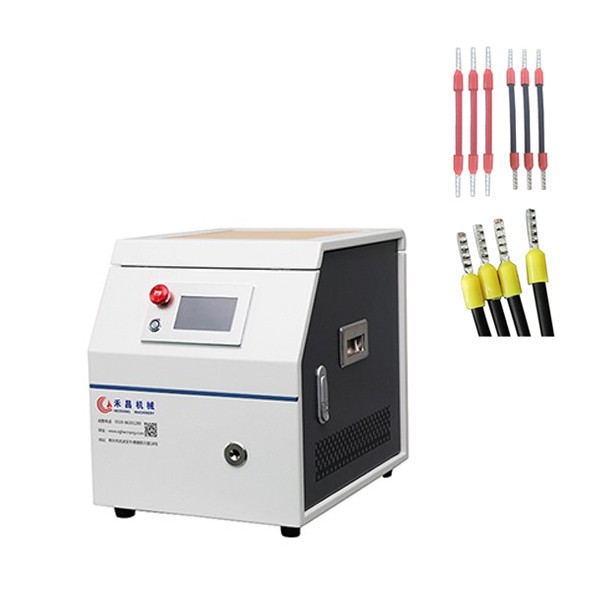
Manual Tools and Benchtop Equipment
You start small wire assembly tasks with basic hand tools. Operators must select physical notches matching wire sizes from 10 to 30 AWG, position the wire, apply physical force, and pull off insulation. This manual mechanics process demands high dexterity and continuous focus. Human fatigue leads to variable quality, creating a conductor damage rate between 3% and 8%.
Manual tools offer great mobility for field repair work at low upfront costs between $20 and $150. However, manual cutting produces high precision variance up to ±0.5mm. Workers complete only 15 to 30 wire strips per minute. Low output limits your ability to scale production efficiently.
Semi-Automatic Stripping and Crimping Units
Semi-automatic equipment bridges the gap between manual labor and full automation. Operators guide wires into the feed port manually, while electric or pneumatic mechanisms execute cuts, stripping, and crimping tasks automatically. Hechang provides a versatile product lineup featuring dedicated cutting and stripping units, pneumatic strippers, and ultra-quiet terminal crimping equipment to boost output.
Integrating a semi-automatic wire processing machine improves output dramatically. Machines achieve 150 to 500 strips per minute with precision tolerances of ±0.1mm.
Category | Manual Tools | Semi-Automatic Units |
|---|---|---|
Wire Range | 10 to 30 AWG | 8 to 30 AWG |
Speed | 15–30 strips/min | 150–500 strips/min |
Precision | ±0.5mm | ±0.1mm |
Upfront Cost | $20 to $150 | $800 to $15,000+ |
Fully Automatic Processing Systems
Fully automatic systems eliminate manual feeding entirely. These systems utilize powered pre-feeders with electrically driven conveyor belts to continuously pull wire from spools. The pre-feeder matches the main unit's acceleration rate. This maintains constant tension, preventing sharp drops in cut-length accuracy during high-speed production cycles.
Advanced automatic equipment handles complex processing tasks effortlessly. You can deploy specialized solutions like the Hechang HC-608 series for multi-core cables. For heavy-duty industrial needs, the Hechang HC-20T handles new energy heavy connectors up to 240mm². These integrated processing units maximize throughput while keeping conductor damage under 1%.
Technical Comparison: Automatic vs. Manual Processing
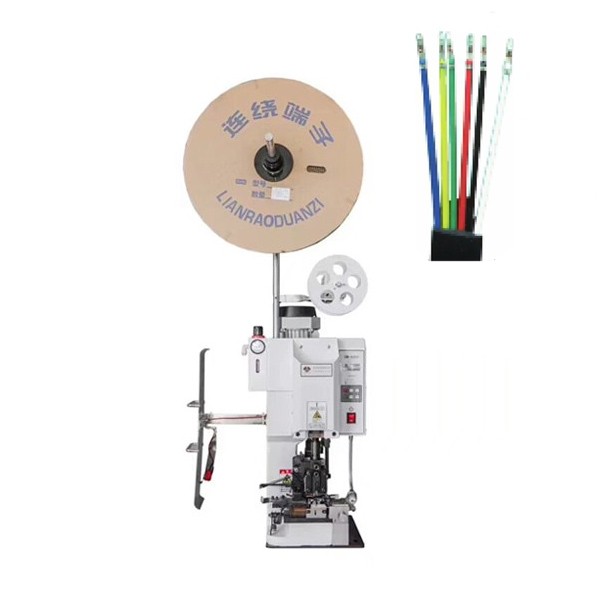
Production Speed and Throughput Rates
Manual wire cutting and stripping create major bottlenecks on your factory floor. Workers must handle every single cable, measure lengths visually, and squeeze hand tools continuously. Integrated process automation completely eliminates these physical delays. Upgrading to a fully automatic wire processing machine increases your overall production speeds up to 15 times faster than manual labor. High-speed feeding systems maintain constant drive tension, enabling continuous output without stopping.
Automated systems also stream line wire identification by replacing manual tagging routines. Hand-labeling wires causes frequent delays and leads to human errors. In contrast, modern automated lines utilize computer-controlled UV laser marking with closed-loop encoder feedback. This setup prints fluid-resistant tracking marks on the fly at maximum running speeds, saving valuable time during downstream assembly.
Precision, Repeatability, and Blade Adjustments
Manual wire processing relies on operator judgment, which causes frequent blade alignment errors. Excess blade pressure nicks copper conductors and removes vital micro-strands. Modern automatic equipment solves this problem through intelligent sensor integration.
An advanced automatic wire processing machine automatically detects wire diameters and adjusts cutting depth and blade pressure dynamically. This precise control eliminates micro-strand loss and ensures uniform strip quality across entire wire spools. Automated software controls also prevent manual keying mistakes through dedicated digital workflow modules.
Pre-stored System Libraries: Consolidates essential specifications—including strip lengths, wire attributes, terminal details, and crimp configurations—into central software modules.
Direct File Imports: Allows operators to populate wire lists automatically from manufacturing databases or job files, eliminating manual keying errors.
Automated Parameter Retrieval: Automatically restores verified job configurations during project switches to prevent manual setup slip-ups.
Integrated camera vision technology and automated optical detection modules instantly verify mark legibility and label positioning, ensuring complete trace documentation without manual visual inspections.
Labor Requirements and Operator Skill
Your choice of equipment changes the skill level and physical demands required from your workforce. Semi-automatic tools demand active operator focus during every cycle, whereas fully automated systems handle repetitive processing steps independently.
Machine Type | Operator Skill Requirement | Training & Operational Demand |
|---|---|---|
Semi-Automatic | Higher operational skill & rhythm dependency | Shorter initial training time, simpler structure, but relies heavily on continuous manual input. |
Fully Automatic | Lower skill demand for daily running | Requires technical setup and maintenance training; easier routine operation with reduced human error. |
Changeover Flexibility and Tooling Setup
Frequent production changes can slow down your line if your shop relies on manual tool re-calibration. Manual setups require physical measurements, trial stripping, and blade adjustments for every wire gauge change. Modern semi-automatic benchtop units and automatic lines streamline this transition through standardized applicator interfaces and quick-change blade cartridges.
You can configure job parameters digitally in seconds. Integrated sensors and positioning hardware align wires automatically, preventing misaligned label placement and incorrect termination depths. Choosing a versatile wire processing machine allows your team to switch between different production orders smoothly while keeping your assembly line active and error-free.
Cost Breakdown and ROI Thresholds
Capital Expenditure vs. Long-Term Labor Savings
Evaluating overall machinery capital expenditure requires you to look beyond upfront purchase costs. Basic manual tools require a small initial cash outlay between $20 and $150. However, manual wire processing drives up continuous operational costs over long production runs. Human operators process wires slowly, and fatigue increases material scrap rates. Upgrading to semi-automatic benchtop machinery requires a starting investment between $800 and $15,000+. Fully automatic equipment demands higher initial investment, but it delivers massive long-term labor savings. Integrated process automation operates up to 15 times faster than manual labor. You eliminate human operator errors and cut material scrap rates significantly across every production shift. Furthermore, reduced physical strain helps maintain high worker morale and prevents costly employee turnover on your production floor. Lower unit processing costs quickly offset your initial machinery expense.
Production Volume Thresholds for Automation
Your daily wire processing volume determines the ideal equipment category for your manufacturing plant. Basic manual tools fit low-volume prototyping work and field repair tasks. Operators complete only 15 to 30 strips per minute using manual hand tools. Continuous manual processing also creates high conductor damage rates between 3% and 8%. You require faster processing equipment when daily wire output demands increase. Semi-automatic units support medium production volumes efficiently. These benchtop units achieve 150 to 500 strips per minute with tight precision tolerances of ±0.1mm. High-volume manufacturing lines require fully automatic equipment. Automated systems pull wire continuously, adjust blade depths automatically, and keep conductor damage under 1%. Selecting automated equipment eliminates production floor bottlenecks as your product order volumes scale up.
Investing in automated wire processing equipment protects your long-term profit margins by replacing expensive manual labor with predictable high-speed output.
ROI and Payback Period Formula
You can evaluate your machinery purchase returns using a straightforward mathematical formula. Express the payback calculation in simple plain text terms: payback period = total capital investment / net annual operating savings. Total capital investment includes machinery purchasing prices, shipping costs, floor installation, spare blade cartridges, and operator technical training. Net annual operating savings combine direct labor cost reductions, reduced raw material scrap, and minimized harness rework.
Machinery Level | Upfront Equipment Cost | Processing Output | Conductor Damage Rate |
|---|---|---|---|
Manual Tools | $20 to $150 | 15–30 strips/min | 3% to 8% |
Semi-Automatic Units | $800 to $15,000+ | 150–500 strips/min | Under 3% |
Fully Automatic Lines | Higher Initial Cost | Up to 15x Manual Speed | Under 1% |
Calculate your exact equipment payback timeline by following these specific steps:
Calculate current annual labor expenses by multiplying worker hourly rates by total yearly manual processing hours.
Estimate projected annual labor expenses under automated machinery processing speeds.
Calculate yearly raw material scrap savings by multiplying cable material costs by reduced strand damage percentages.
Subtract projected automated operational costs from current manual labor expenses and add yearly material scrap savings to determine net annual savings.
Divide your total initial capital investment by your net annual savings to establish your payback period in months.
High daily termination counts shorten equipment payback periods significantly. Most high-volume manufacturing facilities recover their entire machinery investment within a few months of continuous assembly line operation.
Quality Assurance in Wire Processing Machine Operations
Preventing Conductor Damage and Strand Loss
You maintain optimal electrical conductivity by protecting individual copper strands during stripping. Manual tools often nick delicate wires when operators apply uneven pressure. High-precision automated equipment solves this issue through motorized blade controls. Advanced sensors guide stripping blades to precision depths, preserving every conductor strand across large production runs.
Consistent wire stripping protects downstream assemblies from premature failure. Smooth jacket removal prevents micro-fractures in the copper core. You lower scrap rates and keep your production line running without quality interruptions.
Integrated Crimp Force Monitoring Systems
Integrated Crimp Force Monitors (CFM) check connection quality during automated operations. Modern systems monitor crimp quality by evaluating measured force against a pre-learned reference curve in real time. They catch process anomalies instantly before flawed parts reach finished assemblies.
Area Division & Curve Deviation: Uses an area division judgment method alongside force curve deviation measurements for higher precision assessment.
AI-Driven Tolerance Setup: Replaces manual tolerance setup with an automated AI system that applies precise, product-specific tolerances to identify bad crimps.
Defect Identification: Successfully flags process anomalies such as missing wire strands or incorrect insulation placement inside the crimp.
Automated Error Handling: Triggers machine error alerts or immediately activates a bad part cutter upon detecting curve deviations to prevent defective wires from reaching downstream production.
A modern wire processing machine relies on these real-time feedback loops. You catch hidden errors immediately and avoid costly batch rejections.
Meeting Automotive and Industrial Standards
Strict manufacturing standards demand full process control for wire harness production. Automotive and industrial customers require stable terminal crimps that resist heavy vibration and thermal stress. Automated systems log complete termination data to satisfy stringent auditing requirements.
You achieve reliable compliance by integrating precise processing hardware into your factory. Modern automated equipment maintains tight mechanical tolerances and records critical operational values continuously. This precise control helps your plant meet demanding industry specifications while maximizing end-product safety.
Ergonomics, Safety, and Floor Efficiency
Reducing Repetitive Strain in Manual Assembly
Manual wire processing forces operators to squeeze hand tools repeatedly throughout long production shifts. Muscle strain in hands, wrists, and shoulders quickly builds up. Fatigue lowers worker productivity and increases operator errors over time. Continuous physical stress often causes carpal tunnel syndrome and long-term joint pain among factory personnel.
You protect your workforce by introducing automated equipment to handle heavy mechanical tasks. Pneumatic strippers and electric benchtop crimpers execute cyclic cutting actions with simple foot-pedal inputs. Powered feeding drives pull heavy wire spools effortlessly. These ergonomic upgrades reduce physical fatigue, maintain steady production speeds, and keep worker morale high across every shift.
Safety Enclosures and Interlock Features
High-speed cutting blades and heavy terminal press dies create serious hazards during daily operations. Unprotected machinery exposes operators to pinch injuries, flying wire debris, and severe crushing risks. Industrial equipment requires physical barriers to keep human hands away from moving mechanical parts during processing cycles.
A modern wire processing machine incorporates transparent protective covers equipped with electrical safety interlocks. The machine instantly halts all mechanical movements when an operator opens the safety door. Emergency stop buttons sit within reach on control panels, ensuring your staff operates equipment safely without sacrificing output speed.
Workstation Layout and Space Optimization
Floor space management directly impacts your total factory throughput and workflow efficiency. Scattered manual tools and unorganized wire spools create cluttered pathways across your shop. Disorganized assembly areas slow down material transfers and increase handling delays between processing steps.
You optimize factory floor layouts by consolidating multiple processing tasks into single machinery footprints. Automated systems cut, strip, mark, and crimp wires within one continuous enclosure. Compact benchtop units unify wire preparation steps on standard workbenches. Clean workstation arrangements improve material flows, eliminate floor clutter, and maximize output per square foot.
Selecting Equipment by Production Scenario
Low-Volume Prototyping and Field Repair
You select basic hand tools for short-run prototyping projects, custom harness development, and routine field repairs. Technicians easily process low wire volumes with standard conductor sizes ranging from 10 to 30 AWG. Manual hand tools cost between $20 and $150, offering complete physical mobility across various remote job sites without electrical outlet requirements.
Manual wire preparation yields low operational output between 15 and 30 strips per minute. Squeezing manual blades causes length precision variances up to ±0.5mm and drives up conductor damage rates between 3% and 8%. You accept these operational trade-offs for maximum hand tool portability and minimal upfront capital outlay.
Medium-Volume Custom Cable Assemblies
You transition to semi-automatic benchtop equipment for medium-volume custom cable assembly jobs. These versatile benchtop units easily handle wire sizes from 8 to 30 AWG while boosting overall processing speeds to 150 to 500 strips per minute. Operators manually present individual wire ends into active guide ports during continuous production runs on the factory floor.
Investing in a dedicated benchtop wire processing machine requires an upfront capital investment between $800 and $15,000+. Powered electric and pneumatic mechanisms maintain tight cutting tolerances of ±0.1mm. This controlled processing keeps conductor damage rates under 3% while expanding your overall daily manufacturing throughput and operational efficiency.
High-Volume OEM and Automotive Production
High-volume OEM manufacturing facilities require fully automated equipment to fulfill large customer orders on time. Continuous assembly lines prepare complex multi-core cables using specialized equipment like the Hechang HC-608 series. Heavy-duty industrial operations utilize robust crimping machinery like the Hechang HC-20T to process large new energy connectors up to 240mm².
Fully automated processing systems pull wire spools continuously using motorized pre-feeders. Integrated optical detection modules and real-time crimp force monitors keep conductor strand damage rates under 1%. Deploying a fully automatic wire processing machine optimizes high-speed assembly operations while satisfying demanding automotive quality compliance standards across every shift.
Strategic Automation Transition Roadmap
Identifying Assembly Line Bottlenecks
You must evaluate your current production floor to spot clear throughput delays. Operators using manual hand tools complete only 15 to 30 strips per minute. These slow manual steps create major backlogs before downstream assembly tasks. Visual measuring also introduces cut length variances up to ±0.5mm, while manual squeezing drives conductor damage rates up to 8%.
You can map individual processing times across every shift to isolate operational drag. Tracking material waste highlights areas where manual errors cost money. Identifying these high-scrap stations helps you choose the exact processing steps that need immediate upgrades.
Implementing Benchtop Semi-Automation
Upgrading your workshop starts with benchtop semi-automation. You introduce powered electric or pneumatic units to handle cutting, stripping, and crimping tasks. These compact machines boost worker output to 150 to 500 strips per minute. They also tighten cutting tolerances down to ±0.1mm while lowering strand damage rates below 3%.
yield rate = good processed units / total processed units x 100
You place versatile Hechang benchtop equipment onto standard workbenches without altering your entire floor layout. Workers feed wires manually into active guide ports, while powered mechanisms execute continuous cuts safely. This intermediate step stabilizes harness quality, reduces physical strain on operators, and delivers fast return on investment.
Scaling to Fully Automatic Production Lines
High daily termination volumes require scaling to fully integrated production lines. Fully automatic processing systems eliminate manual wire positioning entirely. Powered pre-feeders continuously pull spools with steady drive tension, preventing sharp drops in length accuracy during high-speed runs. Integrated process automation executes complete processing cycles up to 15 times faster than manual labor.
You deploy specialized equipment to expand your manufacturing capabilities further. You can utilize the Hechang HC-608 series to process multi-core cables automatically. You can also integrate heavy-duty crimping systems like the Hechang HC-20T to process large new energy connectors up to 240mm². Automated systems adjust blade depths, monitor crimp forces, and keep strand damage rates under 1%.
You balance low initial equipment costs against long-term labor savings when choosing wire processing machinery. Manual tools offer immediate low upfront costs for basic field repairs. However, automated systems deliver maximum throughput, lower unit costs, and minimal conductor damage under 1%.
Plant managers select ideal equipment using clear operational targets:
Prototyping: Choose manual tools for low daily volumes and 10 to 30 AWG wires.
Medium Volume: Deploy semi-automatic benchtop strippers for steady runs requiring ±0.1mm accuracy.
High Volume: Integrate fully automatic systems for continuous output and strict quality standards.
You modernize your factory by upgrading to versatile semi-automatic workstations before deploying fully integrated automatic lines.
FAQ
How do you choose between semi-automatic and fully automatic machines?
Evaluate your daily termination output and labor capacity. You should select semi-automatic units for medium production volumes. You must choose fully automatic systems when running continuous high-volume assembly lines that require maximum throughput, integrated quality monitoring, and minimal material waste.
What cable sizes can Hechang wire processing machines handle?
Hechang wire processing machines handle a wide range of wire gauges. You can process standard delicate wiring, multi-core cables using the HC-608 series, and large conductors up to 240mm² with heavy-duty crimping equipment like the HC-20T model.
How much faster is automatic wire processing compared to manual labor?
Integrated process automation increases your total production speed up to 15 times faster than manual labor. Powered feeding systems pull wire continuously, while automated blade controls eliminate physical measurement delays and reduce conductor damage rates below 1%.
How does automatic processing prevent conductor strand damage?
Automatic machines utilize intelligent sensors and motorized blade controls to detect wire diameters dynamically. The system automatically adjusts cutting depth and blade pressure, which preserves every copper strand and prevents nicking during high-speed stripping operations.


View More(Total0)Comment lists