


How to choose the right terminal crimping machine for industrial wire harness production
 Jul 28, 2026|
 View:380
You need to match your terminal crimping machine to your wire harness production needs. Machine quality and compatibility affect the reliability of every electrical connection. Choosing high-quality equipment reduces tool failure and boosts productivity. Hechang stands out in the industry for precision, efficiency, and durability.
Impact Area | Benefit |
|---|---|
Failure Rate Reduction | 40% fewer failures with matched tools |
Tool Durability | Fewer breakdowns with robust machines |
Efficiency Improvement | 45% faster jobs with versatile tools |
Focus on actionable criteria to ensure you achieve consistent results and long-term value.
Key Takeaways
Identify wire types and sizes before selecting a terminal crimping machine. This ensures reliable connections and compatibility.
Assess your production volume to choose a machine that meets speed and consistency needs. Automation can significantly boost productivity.
Select a machine that supports the terminal types you use. Different terminals serve various applications, impacting connection security.
Prioritize safety features in your crimping machine. Proper safety measures protect operators and prevent workplace accidents.
Request demos and compare machines to find the best fit for your production needs. This helps avoid costly mistakes and ensures compatibility.
Production Requirements
Wire types & sizes
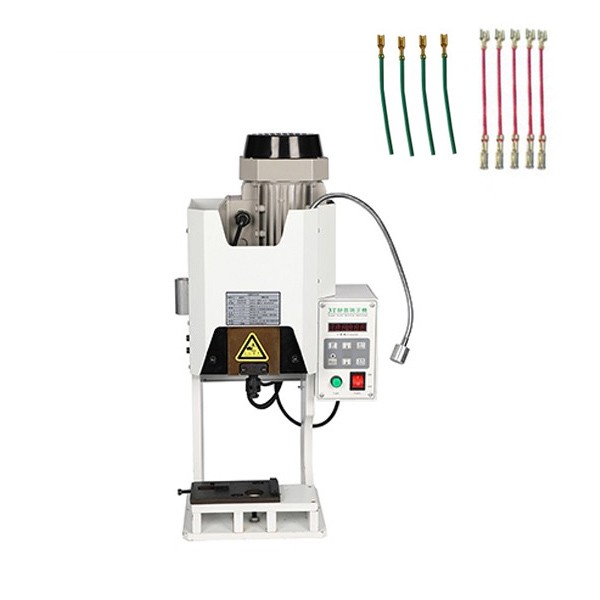
You must identify the wire types and sizes used in your production. The terminal crimping machine needs to handle these specifications to ensure reliable connections. Copper wires offer high conductivity and resilience. Aluminum wires provide a lightweight option for certain applications. The American Wire Gauge (AWG) system helps you select the right diameter for your harness. Larger AWG numbers mean smaller wire diameters. Review the table below to understand common wire types and sizing:
Wire Type | Characteristics |
|---|---|
Copper | High conductivity, resilience, commonly used |
Aluminum | Lightweight alternative, used in some applications |
AWG Sizes | Standard sizing system, larger numbers indicate smaller diameters |
Volume needs
You must assess your production volume before selecting a terminal crimping machine. High-volume operations require machines that deliver speed and consistency. Automated designs minimize manual labor and speed up production. Consistent lengths and pre-terminated connectors make handling easier for machines. When you match machine compatibility to your volume needs, you streamline processes and reduce errors. This approach improves consistency and lowers the risk of interruptions in your production line.
Machine compatibility streamlines processes, which enhances overall manufacturing efficiency.
It reduces errors and improves consistency in production.
Automated designs minimize manual labor and speed up production.
Consistent lengths and pre-terminated connectors facilitate easier handling by machines.
This compatibility leads to fewer interruptions in production lines, lowering the risk of human error.
Terminal types
You must select a terminal crimping machine that supports the terminal types used in your harnesses. Different terminals suit different applications. Ring terminals provide maximum security for switchgear and heavy machinery. Spade terminals allow quick connection and disconnection in control panels and automotive systems. Pin terminals fit into terminal blocks and connectors for relay connections and PCB boards. Blade terminals offer efficient current transfer in automotive, appliances, and HVAC systems. Review the table below to match terminal types to your needs:
Terminal Type | Advantages | Ideal Use Cases |
|---|---|---|
Ring Terminals | Fully enclosed connection for maximum security | Switchgear, control panels, heavy machinery |
Spade Terminals | Fork-shaped design for quick connection & disconnection | Control panels, test equipment, automotive applications |
Pin Terminals | Slender design fits into terminal blocks and connectors | Relay connections, PCB boards, low-voltage equipment |
Blade Terminals | Flat, wide contact surface for efficient current transfer | Automotive, appliances, HVAC systems |
Tip: Always verify that your terminal crimping machine is compatible with the wire types, sizes, and terminals you use. This step ensures efficient production and reliable results.
Terminal Crimping Machine Features
Crimping force & precision
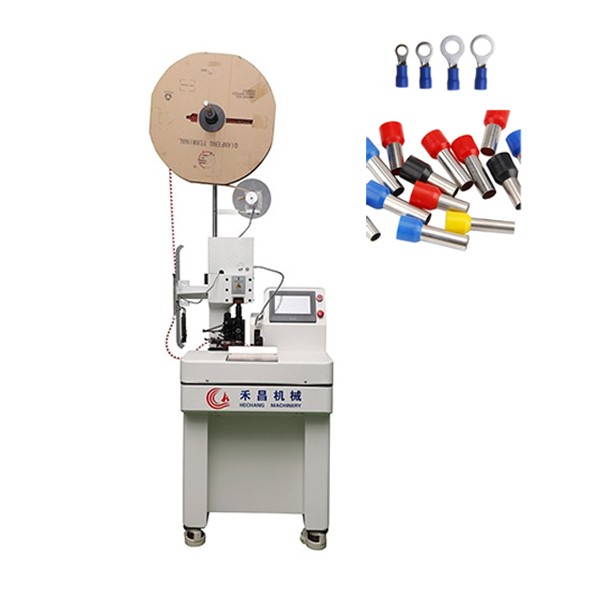
You need to select a terminal crimping machine that delivers the right crimping force for your wire gauge. Proper force ensures strong mechanical and electrical connections. If the force is too low, terminals can pull out or fail under vibration. If the force is too high, wires may break or insulation may be damaged. Crimping precision affects the electrical performance and durability of your wire harness. The crimp height determines compression, contact, and strength. An optimal crimp height gives you stable conductivity and reliable pull force. Improper crimping can cause voltage drops or sudden circuit failures.
Wire Gauge (AWG) | Min Pull Force (IPC/WHMA-A-620) | Typical Application | Failure Mode if Below Threshold |
|---|---|---|---|
28 AWG | ≥5N (1.1 lbf) | Fine signal wiring, sensors | Terminal pullout under vibration |
22 AWG | ≥22N (5 lbf) | Low-power signal harnesses | Intermittent connection during handling |
20 AWG | ≥58N (13 lbf) | General power/signal harnesses | Joint separation under installation load |
18 AWG | ≥80N (18 lbf) | Automotive, industrial power | Thermal cycling-induced failure |
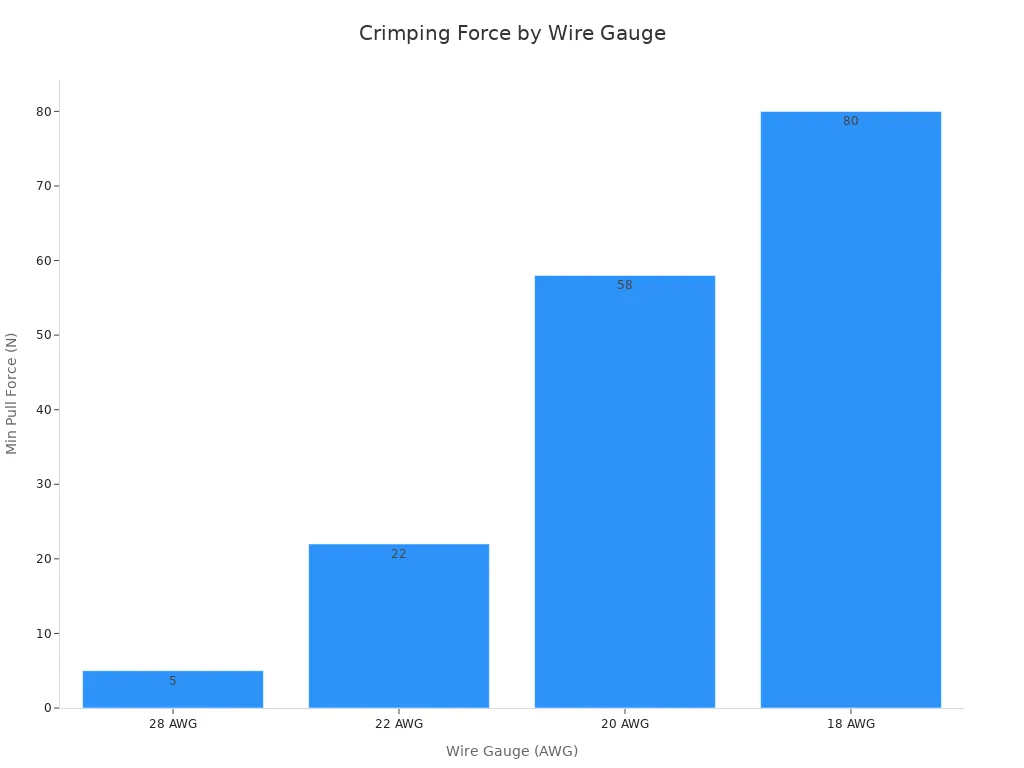
Note: According to IPC/WHMA-A-620, a 20 AWG crimp must withstand at least 55 N pull force. For critical applications, you should add a safety margin.
Hechang terminal crimping machines deliver high precision and consistent force. You can rely on them for stable electrical connections and long-term durability.
Automation options
You can boost your productivity with automation. Automated terminal crimping machines reduce cycle times to about two seconds per crimp. High-volume systems reach up to 1,800 crimps per hour. Manual processes only yield 50 to 100 crimps per hour. Automation lets you focus on quality oversight and material preparation. Automatic machines ensure consistent crimp parameters and eliminate variability.
Automation increases production speed and consistency.
Proper parameter settings improve both efficiency and product quality.
Hechang offers advanced automation options. You can choose machines that match your production volume and workflow.
Tooling compatibility
You must check tooling compatibility with your wire gauge, insulation, and terminal types. Reliable electrical connections depend on matched tooling. The right selection affects mechanical stability, electrical integrity, and environmental resilience.
Tooling must fit your wire gauge and insulation.
Proper insulation prevents shorting and protects terminals from contaminants.
Compliance certifications for dielectric strength and flame-retardant properties are necessary for safety.
Crimp terminals provide a gas-tight seal, enhancing performance and preventing corrosion.
Calibrated crimping tools and matched die sets ensure repeatability and reliability.
Hechang terminal crimping machines support a wide range of tooling. You can use them for various wire types and terminals, meeting industry standards.
Changeover speed
You need fast changeover speed to handle different wire harnesses and terminal types. Quick changeovers reduce downtime and keep your production line moving. Machines with easy-to-swap tooling and intuitive controls help you adapt to new jobs quickly. Hechang designs terminal crimping machines for efficient changeover. You can switch between wire sizes and terminal types with minimal effort.
Tip: Fast changeover speed increases flexibility and productivity in your wire harness production.
Safety features
You must prioritize safety when choosing a terminal crimping machine. Essential safety features protect operators and prevent workplace accidents.
Always wear eye protection and heavy-duty gloves.
Use only manufacturer-approved dies and fittings.
Never crimp a damaged, rusted, or reused ferrule.
Do not exceed recommended crimp diameter.
Inspect hoses for wear, cracks, and bulges before crimping.
Keep hands away from the die area during operation.
Test crimps under controlled pressure before returning to service.
Hechang terminal crimping machines include robust safety features. You can operate them with confidence and reduce risks in your facility.
Callout: Reliable crimping methods and quality checks, such as pull-force testing and go/no-go gaging, are essential for ensuring connection reliability. Use digital testers and follow standard procedures to verify every crimp meets minimum requirements.
Attribute | Hechang Terminal Crimping Machines | Description |
|---|---|---|
Precision | High | Delivers high precision in crimping operations. |
Efficiency | High | Enhances productivity and reduces operational costs. |
Durability | Excellent | Built for long-term use in demanding environments. |
Compatibility | Meets industry standards | Flexible design for various applications. |
You can trust Hechang terminal crimping machines for precision, efficiency, durability, and compatibility. These features help you achieve reliable wire harness production and meet industry standards.
Quality & Reliability
Build quality
You need a machine that stands up to daily industrial use. Strong build quality ensures your equipment lasts longer and performs reliably. Hechang uses high-quality materials and advanced manufacturing techniques. This approach gives you a stable and durable machine, even in tough environments. Industry standards and certifications play a key role. They help you achieve consistent production quality and meet OEM requirements. Compliance with these standards also lowers defect rates and improves product safety.
Tip: Regular maintenance keeps your machine running smoothly. Simple tasks like greasing moving parts or checking the fuse can prevent unexpected downtime.
Maintenance Procedure | Description |
|---|---|
Foot Pedal Switch | Replace if it fails. |
Proximity Switch | Check functionality if continuous striking occurs. |
Fuse | Replace immediately if it blows. |
Greasing | Add 1-3 drops of grease daily to specified oil holes if movement is sluggish. |
Motor Replacement | Replace with a new 180W motor if it malfunctions. |
Die Adjustment | Use a wrench to adjust if the die is stuck and check for damage. |
Blade Die Change | Adjust height and feeding part when changing the blade die. |
Brand reputation
You want to choose a supplier with a strong reputation. In the terminal crimping machine industry, brand reputation depends on supplier reliability, after-sales support, and commitment to quality. Leading brands include Komax, Rittal, and TE Connectivity. These companies are known for innovation and reliability. Hechang has built a solid reputation by focusing on precision, efficiency, and customer satisfaction. You can trust Hechang to deliver consistent results and dependable service.
Supplier reputation matters for long-term success.
After-sales support ensures you get help when you need it.
Brands that invest in sustainability and technology lead the market.
After-sales support
You need reliable support after your purchase. Hechang provides dedicated technical support and fast maintenance services. This commitment helps you resolve issues quickly and keep your production line running. Easy access to spare parts and clear instructions make maintenance simple. You can adjust and maintain your machine with confidence. Good after-sales support protects your investment and ensures long-term reliability.
Note: Always choose a supplier that offers strong after-sales service. This support keeps your terminal crimping machine in top condition and reduces downtime.
Cost & ROI
Initial investment
You need to consider the initial investment when selecting a terminal crimping machine for your facility. Entry-level hydraulic models start at $3,000 to $5,000. Machines designed for larger production volumes range from $15,000 to $50,000. These prices reflect the machine’s capabilities, automation features, and build quality.
Basic hydraulic machines: $3,000–$5,000
High-volume or automated machines: $15,000–$50,000
You should match your investment to your production needs. A higher upfront cost often brings better performance and longer service life.
Operating costs
You must evaluate ongoing expenses to understand the true cost of ownership. Operating costs include energy consumption, maintenance, tooling replacements, and labor. Automated machines use less labor and reduce errors, which lowers costs over time. Regular maintenance keeps your machine running smoothly and prevents unexpected downtime. You should track the cost of replacement dies and parts. Efficient machines use less energy and require fewer repairs.
Tip: Schedule routine maintenance and monitor energy usage to keep operating costs low.
Cost Factor | Impact on Budget |
|---|---|
Energy Consumption | Lower with efficient models |
Tooling Replacement | Varies by usage |
Maintenance | Reduces downtime |
Labor | Lower with automation |
Return on investment
You want to maximize your return on investment. A reliable terminal crimping machine increases productivity and reduces waste. Automated systems deliver consistent quality, which lowers rework rates. Durable machines last longer and require fewer repairs. You can calculate ROI by comparing the initial investment and operating costs to the value of increased output and reduced errors.
Faster production speeds boost revenue.
Fewer defects save money on materials and labor.
Strong after-sales support protects your investment.
Note: Investing in a high-quality machine pays off through improved efficiency, lower costs, and reliable performance.
Making the Choice
Request demos & samples
You should always request demos and samples before making a final decision. This step helps you evaluate the machine’s performance and compatibility with your wire harness requirements. Follow these best practices:
Verify that the supplier holds all necessary certifications for quality and safety.
Review the machine specifications to confirm they match your wire types and production needs.
Assess the supplier’s reliability by checking their audit history and testing procedures.
Consider all ownership costs, including maintenance, tooling, and energy consumption.
Request custom quotes tailored to your specific application.
Tip: Demos and samples allow you to see the machine in action and identify any potential issues before committing to a purchase.
Compare machines
You need to compare different machines to find the best fit for your operation. Look at features such as automation, changeover speed, and safety systems. Evaluate build quality and compatibility with your wire types and terminals. Avoid common mistakes like ignoring environmental compatibility or overlooking terminal connection types. Make sure you do not compromise on wire gauge or conductor material. Regulatory compliance is essential for avoiding costly recalls. Custom solutions often provide better results than generic options.
Comparison Criteria | Why It Matters |
|---|---|
Automation Level | Boosts productivity and reduces labor |
Changeover Speed | Minimizes downtime |
Build Quality | Ensures long-term reliability |
Regulatory Compliance | Prevents legal and quality issues |
Customization Options | Matches your exact production needs |
Callout: Aligning your terminal crimping machine choice with production needs, quality, and long-term value improves manufacturing outcomes and protects your investment.
Consult suppliers
You should consult suppliers to clarify technical details and support options. Ask questions that help you understand the machine’s capabilities and maintenance requirements:
What are the machine’s capabilities for repeatable processing?
Is there a process to ensure consistent performance?
What is the lifespan of consumable tools, and how are replacements handled?
Is there a routine maintenance system in place?
Are processing instructions clear and current?
Is quality data available and up to date?
Modern manufacturers use advanced wire processing technology and targeted automation to ensure repeatable production quality. Due diligence steps, such as verifying certifications and assessing technical support, protect your project from costly failures.
Note: Consulting with experienced suppliers helps you make informed decisions and ensures you select the right equipment for your wire harness production.
Choosing the right terminal crimping machine starts with listing your product specs, daily output, workspace, budget, and safety needs. Match these to machine features for a perfect fit. Compare your requirements to available models to avoid extra costs or unused capacity. Hechang machines offer strong value, trusted support, and reliable performance for many users.
A good match between your needs and machine capacity means faster jobs, fewer adjustments, and consistent quality.
FAQ
What factors should I consider before buying a terminal crimping machine?
You should review your wire types, terminal styles, production volume, and workspace. Check machine compatibility with your materials. Evaluate automation features and safety systems. Reliable brands like Hechang offer strong support and proven performance.
How often should I maintain my terminal crimping machine?
You should perform daily checks on moving parts and safety features. Schedule monthly inspections for tooling and electrical components. Follow the manufacturer’s maintenance guide for best results.
Can one machine handle different wire sizes and terminals?
Many advanced machines, including Hechang models, support multiple wire sizes and terminal types. You can switch tooling quickly for different jobs. Always confirm compatibility with your supplier.
Why is crimping force important?
Proper crimping force ensures a secure electrical and mechanical connection. Too little force causes weak joints. Too much force damages wires. Use machines with adjustable force settings for best results.
What support does Hechang provide after purchase?
Hechang offers technical support, spare parts, and maintenance guidance. You can contact their team for troubleshooting or training. This support helps you keep your production line running smoothly.


I want to comment
Recommended Products


Recent News
1.What the difference between manual and automatic terminal crimping machine
2026-06-262.Top 5 terminal crimping machine manufacturers in China 2026
2026-06-023.What is Terminal Crimping Machine
2024-10-144.What does a terminal crimping machine do
2024-09-275.How to use the wire terminal crimping machine
2022-09-20


View More(Total0)Comment lists