


What tube cutting machine fits your round pipe processing needs
 Sep 22, 2026|
 View:10
You face a crowded field of options. Manual saws, semi-auto cutters, automatic CNC tube lasers, and specialized machines all promise results. How do you choose the right tube cutting machine for your round pipe work?
Start with three numbers. First, define your pipe's maximum outer diameter. Second, measure your wall thickness. Third, estimate your expected daily volume. These three filters eliminate most wrong choices immediately.
This blog gives you a decision framework. You get a quick comparison table. You also learn the key factors that narrow your options. No history lessons. No brand pitches. Just practical steps you can apply today.
Key Takeaways
Start with three numbers: maximum outer diameter, wall thickness, and daily volume.
Use the decision table to compare machine types and eliminate wrong choices.
Match automation level to your production volume: manual for low, full CNC for high.
Choose the cutting method based on material and quality needs: laser for burr-free, cold saw for thick stainless.
Evaluate total cost per part, not just upfront price, to find the best machine.
Tube Cutting Machine Decision Table
You need a clear way to compare your options. This table gives you the key specs for the most common machine types. Use it as a starting point to match your tube size, volume, and quality needs.
Machine Type | Max OD Range | Wall Thickness | Speed | Upfront Cost | Burr Quality |
|---|---|---|---|---|---|
Manual Abrasive Saw | Up to about 6 in (150 mm) | Up to 1/4 in (6 mm) | Slow: 10–30 cuts/min | Low | Rough: burr up to 0.15 mm |
Semi-Auto Cold Saw | Up to about 4 in (100 mm) | Up to 3/8 in (10 mm) | Medium: 30–60 cuts/min | Medium | Clean: burr under 0.02 mm |
Full-Auto Fiber Laser | Up to about 4 in (105 mm) | Up to 3/8 in (10 mm) | Fast: 60–200 cuts/min | High | Burr-free |
You see the trade-offs right away. A manual abrasive saw costs little but leaves a burr as high as 0.15 mm. That means extra deburring work later. A semi-auto cold saw costs more but holds burr under 0.02 mm — smooth enough for most fittings. A full-auto laser gives you speed and a burr-free edge, but you pay more upfront.
Manual vs. Semi-Auto vs. Full Auto
Your choice of automation level depends mostly on your daily volume. If you cut fewer than 200 pieces a day, a manual machine gives you flexibility with low investment. But each cut needs your full attention, and you may need secondary operations to remove burrs.
For medium-volume shops, a semi-auto tube cutting machine offers a good balance. Hechang produces semi-auto models like the HC-515 for this exact need. You load the tube, set the length, and the machine feeds and cuts. The operator supervises but does not do heavy physical work. This style handles around 500–1,000 pieces per shift without the cost of a full CNC system.
Full-auto machines take over completely. They load, feed, cut, and sort tubes. You only need one operator for multiple machines. This suits high-volume lines producing thousands of parts each day. The high upfront cost makes sense when you run long production runs and need consistent quality.
Laser vs. Saw vs. Shear
Each cutting method changes the quality of your final part. Fiber laser cutters are the most versatile for round tubes. Machines from manufacturers like SOCO and TRUMPF can cut complex profiles, not just straight lengths. They handle diameters up to 105 mm and achieve a crop length as short as 25 mm, a SOCO patented feature. The laser beam does not touch the material, so you get a clean, burr-free edge every time. This eliminates the need for filing or grinding later.
Saw cutting uses a rotating blade. A cold saw is the best saw choice for round pipes. It stays cool enough to avoid heat discoloration. The blade produces a smooth cut with burr under 0.02 mm — nearly as good as a laser. Cold saws excel on thick-wall stainless steel where a laser might cause heat damage. For comparison, an abrasive saw creates a burr up to 0.15 mm, as shown in the table.
Shear cutting works differently. It deforms the tube instead of removing material. For round pipes, a shear often leaves an oval end or a jagged edge. Most shops avoid shear for round profiles unless the end quality does not matter. It is more common for square or rectangular tubes.
You pick the method by balancing your quality requirement against your budget. If you need zero burr and high speed, a fiber laser is the answer. If you need low burr and lower cost, choose a cold saw. If volume is low and you can accept a small burr, a manual abrasive saw still works.
Now you have a framework to match your tube specifications to a machine type. The next section will help you narrow down based on your exact diameter and wall thickness.
Tube Diameter and Wall Thickness Limits
Maximum OD and Machine Type
Your pipe's outer diameter sets a hard limit on which machines can handle the job. A chuck-style laser cutter works well for large round pipes. For example, the GYC model uses a chuck that accepts tubes from 90 mm to 550 mm outside diameter. If your pipe falls in that range, a laser with a chuck system gives you clean cuts and good speed.
Smaller pipes open up more options. Manual roll cutters handle common plumbing sizes. The KNIPEX TubiX XL Cutter accepts pipe up to 3 inches outside diameter. The RIDGID 152 Quick-Acting Cutter handles up to 2⅝ inches. These tools cost far less than a full CNC system. They suit job shops and maintenance work where volume stays low.
Manual Roll Cutter | Maximum Outside Diameter (OD) |
|---|---|
KNIPEX TubiX XL Cutter | 3 in. |
RIDGID 152 Quick-Acting Cutter | 2⅝ in. |
You match the machine to your pipe size first. Then you check wall thickness. A manual saw may struggle with very thick walls. A high-powered laser or cold saw handles those jobs better.
Thin-Wall vs. Heavy-Wall Chuck Systems
Thin-wall tubes demand gentle clamping. A standard chuck can crush or deform the pipe during cutting. Segmented jaw chuck designs solve this problem. They reduce point loading in several ways:
The chuck uses a fully-enclosed, wraparound design that contacts the entire circumference of the thin-wall tube.
Six synchronized jaw segments move together to apply a perfectly uniform radial force around the part.
Uniform force distribution eliminates localized stress points that cause bending and distortion.
The full circumferential contact prevents any single area from experiencing concentrated pressure.
This design ensures geometric stability and flatness, even on thin-wall aluminum parts.
Heavy-wall structural tubes need a different approach. A cold saw or a high-powered laser gives you the force and power to cut through thick material without stalling. For corrugated tubes, Hechang's HC-602 handles diameters from 5 mm to 30 mm. That machine targets a specific niche. Your tube cutting machine choice depends on matching the chuck system to your wall thickness.
Material Matters for Your Tube Cutting Machine
Metal Types – Steel, Aluminum, Stainless
The metal you cut changes everything about your process. Fiber laser cutters handle carbon steel, stainless steel, and aluminum with burr-free edges. The beam vaporizes material instead of tearing it. You get a clean finish without secondary deburring.
Cut parameters shift with each metal. For 2mm thick carbon steel tube, optimal settings are speed 4–6 m/min, power output 3000W, and gas N₂ at pressure 12–16 bar. Set focus between –1.5 and –2mm, nozzle height at 1mm, and use a single 2.0 nozzle. For thin carbon steel (1–2mm), use N₂ instead of O₂. This prevents oxidation and keeps the cut edge clean.
Aluminum cuts well with a laser because the beam leaves no burr. The metal's high conductivity and low melting point allow fast, clean separation. Stainless steel behaves differently. Thick stainless holds heat, and a laser can cause heat damage or discoloration. A cold saw often works better here. The blade cuts without melting the metal, so you avoid thermal stress. Your tube cutting machine choice depends on matching the method to the metal's properties.
Plastic and Corrugated Tubes
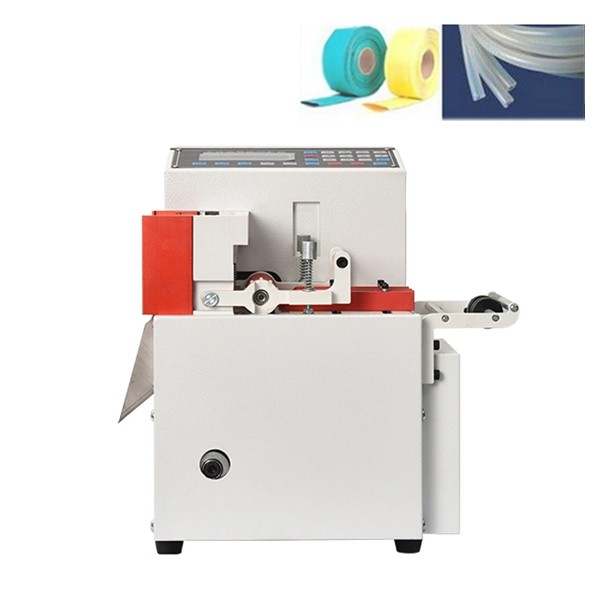
Plastic and corrugated tubes need purpose-built machines. A standard metal saw or laser will crush, melt, or deform these materials. Hechang's HC-100 heat shrink tube cutting machine uses a microcomputer numerical control device. You set cutting length, quantity, and feeding speed freely. The machine delivers high precision with low loss.
For corrugated tubes, Hechang's HC-605 handles crests between 5 and 35 mm outside diameter. This machine offers optional slitting (open slotting) for flexible production. The HC-602 also targets corrugated tubes with diameters from 5 to 30 mm. These machines apply gentle clamping and controlled blade pressure. They protect the tube's shape while delivering clean cuts. Material conductivity and melting point guide your choice. Laser suits aluminum for burr-free edges. Saw suits thick stainless to avoid heat damage. Plastic and corrugated tubes demand specialized equipment.
Production Volume and Tube Cutting Machine Capacity
Low Volume – Job Shop Flexibility
Your daily output decides how much machine you actually need. A job shop cuts a few hundred pieces a day, often in different sizes. You change setups often. A manual or semi-auto machine gives you that flexibility without a large investment. You can switch between jobs in minutes.
Hechang builds semi-auto models like the HC-515 for exactly this kind of work. You load the tube, set the length, and the machine handles the feed and cut. One operator can run the machine and manage other tasks at the same time. This setup keeps your labor cost low and your changeover time short. For a shop with varied orders, this balance matters more than raw speed.
High Volume – Automated Cut-to-Length Lines
High-volume operations face a different problem. You run the same tube size for hours or days. Every second of downtime costs money. You need a machine that loads, feeds, cuts, and sorts without stopping. An automatic CNC fiber laser cutter with a feeder meets this demand.
The TRUMPF TruLaser Tube 7000 handles tubes up to 8 meters long. It loads automatically and cuts at high speed. You get consistent parts with no operator fatigue. This kind of line suits factories that ship thousands of pieces per day.
Hechang can customize a tube cutting machine for your specific volume needs. Their production lines and professional team ensure timely delivery. You do not wait months for a standard unit. You get a machine built for your output level. That shortens your path from order to production.
Tube Cutting Machine Automation Levels
Manual and Semi-Auto Control
Manual and semi-auto machines reward skilled operators. You control the feed, the cut, and the measurement. Your experience decides the final quality. This style suits shops with trained staff and varied work. You change jobs fast without reprogramming.
Semi-auto control adds powered feed and stops. You still load each tube by hand. The machine handles the rest. Hechang's HC-100 heat shrink tube cutting machine uses a microcomputer numerical control device. You set cutting length, quantity, and feeding speed freely. The machine holds those settings with high precision and low loss.
That precision shows in the numbers. A manual stop-based system depends on human measurement. Length accuracy lands between ±0.3 and ±0.8 mm. A microcomputer NC tube cutter with servo positioning tightens that range to ±0.1 to ±0.3 mm. For short runs, the wider manual tolerance may pass. For repeat orders, the NC advantage compounds across hundreds of parts.
Full CNC and Integrated Lines
Full CNC machines remove the operator from the cut. The controller reads your program and executes every move. You get the same part on the first piece and the thousandth. This repeatability matters when your customer demands identical fittings every time.
Integrated lines go further. They combine cutting, sorting, and packaging into one flow. The BLM LT7 leads this category as an industry standard. The HSG TP65 offers strong capability at the best value point. These systems turn raw tube into finished, boxed parts with minimal touch labor.
Your choice between semi-auto and full CNC comes down to volume and consistency. A semi-auto tube cutting machine fits mixed production. A full CNC line fits dedicated, high-output work. Match the automation level to your order pattern, and you avoid paying for capability you never use.
Budget and Total Cost of Ownership
Upfront Price vs. Cost per Part
The sticker price tells only part of the story. You must weigh the upfront investment against the cost of every part you produce. A manual saw costs little to buy. But you pay for labor on every cut, and you may pay again for deburring. A laser costs far more upfront. Yet it cuts faster, needs less labor, and often skips secondary operations entirely.
Your production volume decides which math wins. At 500 parts, a saw is usually cheaper because you spread setup costs over fewer units. At 5,000 or more parts, a laser often becomes more economical. Faster cycle time, lower labor input, and minimal finishing drive that shift. At 10,000 or more parts, or in recurring production, a laser provides a substantial cost advantage through automation and reduced scrap rate. The break-even volume lands at approximately 3,000–5,000 units. Your exact break-even point depends on labor cost per hour, geometry complexity, secondary processing needs, and whether production is one-time or recurring.
Factor | Laser | Saw |
|---|---|---|
Machine Cost | High upfront investment | Low entry cost |
Tooling Cost | Minimal, no blade wear | Recurring blade replacement |
Maintenance | Moderate (optics, alignment, assist gas) | Moderate (blade, coolant, alignment) |
Labor | Low, automation capable | Higher, manual handling |
Floor Space Efficiency | High, integrated systems | Moderate |
The hourly rate of a tube laser is usually higher, but once you factor in saved drilling, coping, deburring, and faster assembly, the total cost per part can be lower for many designs.
Tooling, Maintenance, and Consumables
Ongoing costs separate a cheap machine from a profitable one. A cold saw needs blade replacement on a regular schedule. A laser consumes assist gas and lenses. Both need alignment checks and coolant service. You must budget for these items before you buy.
Chinese manufacturers like Hechang offer competitive upfront costs with customization and quality certifications. That combination lowers your entry barrier without sacrificing build quality. Hechang's after-sales service reduces downtime when a part wears out or a setting drifts. Less downtime means more parts per shift and a lower cost per part over the machine's lifespan. When you evaluate any tube cutting machine, add up the purchase price, the consumables, and the service support. The lowest total wins.
Start with your tube's physical parameters. Note the outer diameter, wall thickness, and material. Map those numbers to the decision table. That step eliminates machine types that cannot handle your pipe.
Next, match the automation level to your production volume and budget. Low volume favors manual or semi-auto models. High volume justifies a full CNC line. Your budget decides how far you can go.
List your top three specifications, compare the options in the table, and contact 2–3 suppliers for sample cuts and quotes. The right tube cutting machine is the one that gives you the best cost per part over its lifespan.
FAQ
Do I need a special machine for very small diameter tubes?
Yes. Standard chucks may deform tubes under 5 mm. Hechang's HC-602 and HC-605 models are built for corrugated tubes from 5 mm to 35 mm outer diameter. They use gentle clamping to protect thin walls.
How can I avoid crushing thin-wall tubes during cutting?
Select a machine with a segmented jaw chuck. It wraps around the full circumference of the tube. Six synchronized jaws apply uniform force, preventing localized pressure that would otherwise bend or distort thin-wall aluminum or stainless parts.
When should I choose a cold saw over a fiber laser?
Pick a cold saw for thick stainless steel. Laser heat can damage the metal or leave discoloration. A cold saw gives you a smooth cut with burr under 0.02 mm, nearly as clean as a laser, without thermal stress.
What tube length can my cutting machine handle?
Manual and semi-auto machines typically handle standard stock lengths up to 6 meters. For longer tubes, you need an automatic CNC fiber laser with a feeder. The TRUMPF TruLaser Tube 7000, for example, processes tubes up to 8 meters long.


View More(Total0)Comment lists