


How to select the right tube cutting machine for your manufacturing requirements
 Aug 19, 2026|
 View:217
Selecting the right tube cutting machine requires a systematic decision-making framework for your production facility. You must match specialized equipment capabilities directly to your material profiles, whether you process rigid metal, heat shrink sleeves, or corrugated tubing.
Evaluating critical operational factors upfront will optimize your production yield:
Material mix, specifically outer diameter (OD) and wall thickness.
Batch volume requirements for daily target outputs.
Cut accuracy tolerances for precise assembly standards.
Labor automation needs to eliminate manual feeding bottlenecks.
You ensure maximum operational efficiency and high long-term return on investment by aligning your equipment choice with these technical parameters.
Key Takeaways
Analyze your tubing outer diameter and wall thickness to select compatible cutting equipment.
Apply the 80-20 rule to purchase machines for your primary volume needs.
Use mechanical cutting systems instead of thermal lasers to prevent polymer material melting.
Select zero-tailing mechanisms to reduce raw material waste and lower total expenses.
Choose automated bundle loaders to eliminate manual feeding bottlenecks on your floor.
Defining Core Production Requirements
Assessing Material Mix and Tube Dimensions
You must start your selection process by evaluating your physical tubing parameters. Different materials require specific cutting mechanisms to prevent deformation, ragged edges, or excessive material loss. You need to map out every physical property of your inventory before shopping for equipment.
Dimensional Parameter | Key Production Considerations |
|---|---|
Outer Diameter (OD) | Determines machine jaw size; e.g., corrugated profiles range from 5 mm to 35 mm OD. |
Wall Thickness | Influences blade pressure and cutting force requirements. |
Profile Type | Governs tooling choices for round, square, open-slot, or corrugated tubing. |
Raw Material Length | Dictates feeding mechanism design and space requirements. |
Matching your machine features to these exact specifications guarantees clean cuts. Standard round tubing requires basic clamping. However, delicate heat shrink sleeves and flexible corrugated profiles demand specialized feeding controls to prevent crushing during the cutting cycle.
Applying the 80-20 Rule to Machine Sizing
You should apply the classic 80-20 rule to maximize your equipment investment. Target a machine that handles 80 percent of your daily production volume with ease. Buying an oversized machine for extreme, low-volume edge cases wastes valuable capital and floor space.
Production Category | Operational Strategy |
|---|---|
Core Workload (80%) | Process on your primary high-efficiency benchtop units. |
Fringe Cases (20%) | Outsource or process on specialized auxiliary equipment. |
Focus your budget on high-speed precision for your primary material mix. This strategy keeps your primary assembly line fast and reliable. You can easily manage the remaining 20 percent of fringe work through secondary equipment or qualified third-party suppliers. This focused approach lowers your initial capital expenditure while maintaining high daily throughput.
Selecting the Ideal Tube Cutting Machine Technology
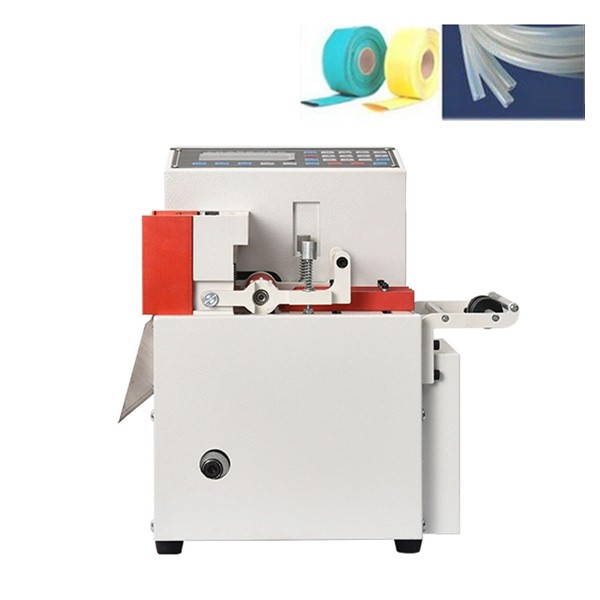
Selecting the right tube cutting machine technology depends directly on your raw material types and daily processing goals. Choosing an incompatible cutting method can deform your profiles, waste expensive stock, or create severe bottlenecks on your factory floor. You must balance heat application, mechanical blade action, and electronic control options carefully before choosing equipment.
Comparing Thermal Laser and Mechanical Methods
Thermal laser processes use high-energy heat beams to cut through solid metal stock. Industrial laser systems produce crisp cuts on rigid steel pipes, yet intense heat can easily singe flexible polymers or melt thin-walled sleeving. In contrast, mechanical cutting systems rely on sharp physical blades, cold saws, or precision shearing mechanisms to divide stock without heat generation.
Modern mechanical systems integrate microcomputer numerical control to manage blade velocity, drive torque, and clamping pressure seamlessly. You achieve ultra-clean cut faces without thermal distortion, material discoloration, or rough burrs.
Cutting Technology | Thermal Laser Systems | Microcomputer Mechanical Systems |
|---|---|---|
Primary Cutting Action | High-energy thermal beam fusion | Controlled mechanical blade shear |
Heat Affected Zone | High thermal output; scorches polymers | Zero thermal output; prevents melting |
Material Compatibility | Thick structural metal piping | Heat shrink, corrugated, flexible tubing |
Process Control Method | Optical beam and assist gas settings | Microcomputer numerical control interface |
Mechanical cutting processes excel across wire harness assembly lines. You eliminate material scorching on sensitive sleeves, and you sustain consistent cutting cycle times throughout long production runs. Furthermore, mechanical blades reduce operational power requirements compared to high-wattage thermal resonators.
Evaluating Specialized Tube Cutting Machine Features
Specialized manufacturing operations require specialized machine functions to meet strict quality standards. Advanced microcomputer numerical control systems allow your shop operators to program custom cut lengths, target output quantities, and material feed speeds directly into digital control panels. This intelligent automation maximizes daily throughput while eliminating manual measurement errors on your production floor.
Processing delicate heat shrink tubing requires specialized equipment to prevent material waste and distortion. The Hechang HC-100 heat shrink tube cutting machine provides dedicated low-loss cutting for sensitive shrink sleeves. Its specialized ergonomic layout ensures maximum cutting accuracy while keeping scrap rates near zero.
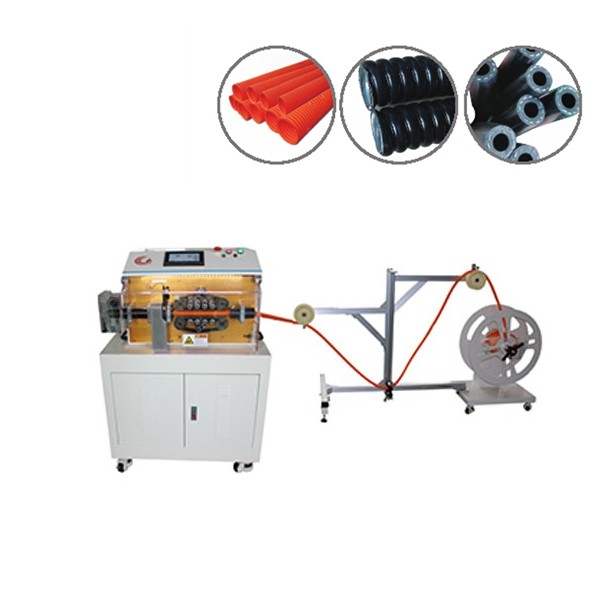
Corrugated tubing presents unique manufacturing challenges because flexible outer ridges easily deform under improper clamping or blade force. Purpose-built machines handle these variable profiles reliably:
The Hechang HC-602 series processes corrugated tubing from 5 mm to 35 mm in outside diameter with high operational stability.
The Hechang HC-605 series handles corrugated profiles from 5 mm to 35 mm in outside diameter and offers an optional slitting capability for open-slotting needs.
Versatile workstations like the Hechang HC-515 deliver comprehensive solutions for multi-layer harness processing or complex cutting assignments.
These cutting systems integrate top-grade materials built through strict production protocols. Certified to international quality standards, these units perform reliably on automotive, electronics, and general industrial assembly lines. Modern manufacturers rely on this build quality to preserve high machine uptime and ensure long-term equipment stability.
Investing in a high-performance tube cutting machine provides your manufacturing facility with dedicated cutting modes tailored to your exact industrial workflow. Microcomputer precision keeps your raw material consumption highly efficient. Optional slitting units combine lengthwise cutting and longitudinal slitting into one automated pass, significantly boosting your total harness production efficiency.
Technical Specifications and Precision Control
Resonator Power and Control Precision
You must evaluate power requirements and numerical control precision before selecting industrial machinery. Laser power directly dictates the maximum cut thickness for solid metal pipes. For instance, a 3000W laser cuts stainless steel tubing up to 10mm thickness with reliable speed. Selecting the correct power rating prevents operational bottlenecks and maintains fast production cycles across your facility.
Beyond power ratings, microcomputer numerical control precision ensures consistent batch quality across demanding assembly lines. High-precision system controllers regulate motor drives to achieve tight dimensional targets repeatedly.
Performance Metric | Standard Precision Value | Production Benefit |
|---|---|---|
Cutting Tolerance | ±0.001 inches | Eliminates manual rework on tight assemblies. |
XY Positioning Accuracy | ±0.002 inches (0.05 mm) | Keeps complex notch patterns aligned accurately. |
XY Repeatability | ±0.001 inches (0.03 mm) | Guarantees exact part dimensions across long runs. |
Modern numerical control software continuously manages feed velocity and blade pressure. You achieve ultra-clean cut faces without crushing thin plastic sleeves or deforming flexible corrugated walls. This intelligent digital control eliminates operator errors during high-volume material processing. You maintain total command over batch quantities, material feeding speeds, and cut lengths through a simple control panel interface.
Chuck Rigidity and Zero-Tailing Functionality
Dynamic chuck performance directly dictates workholding stability during rapid rotation or mechanical blade contact. A high-rigidity machine frame built with an FEA-optimized base provides exceptional vibration damping. This solid foundation supports high-speed processing without machine flex. High-precision dual-chuck designs grip stock firmly without scarring delicate material surfaces. Furthermore, follow-up support rollers and U-shaped bionic rollers adaptively adjust to suppress vibration and axial drift on long tubes. A positioning accuracy of ±0.05mm guarantees operational stability and consistency. This solid clamping setup creates cleaner, flatter cuts that directly improve your surface finish.
Accuracy Parameter | Target Value | Impact of Workholding Rigidity |
|---|---|---|
Roundness | 0.005 mm | Achievable with proper chucking; prevents oval distortion. |
Concentricity | 0.01 mm (single setup) | Reduces run-out; proper chucking maintains center axis. |
Perpendicularity | 0.005 mm per 10 mm radius | Controls face angle; avoids edge deformation on faces. |
Rigid chucking performance also enables advanced operational features like zero-tailing functionality. Standard material processing often leaves unusable end remnants inside clamping jaws. These leftover pipe ends create expensive raw material waste over high-volume assembly runs. Zero-tailing mechanisms pass raw stock through synchronized clamping chucks to cut stock down to the final edge.
Integrating an automated zero-tailing tube cutting machine into your production facility minimizes material scrap generation dramatically. You convert nearly every foot of raw stock into usable finished parts. This optimized material yield lowers your raw inventory expenses and boosts overall factory profitability. Choosing strong workholding rigidity alongside precise microcomputer controls secures long-term manufacturing efficiency for your enterprise.
Operational Automation and Software Integration
Automated Bundle Loading and Material Handling
Manual material feeding creates severe operational bottlenecks on busy assembly floors. Operators spend valuable work hours measuring raw stock, loading individual tubes, and realigning physical profiles manually. Automated bundle loaders resolve these structural inefficiencies by delivering continuous raw stock directly into the machine feeding mechanism. Automatic material loaders handle large material bundles effortlessly, keeping continuous feed mechanisms full without manual assistance. You eliminate operator fatigue, prevent material loading delays between cutting cycles, and keep your production line running at peak capacity.
Advanced material handling features streamline complex wire harness assembly workflows. Specialized workstations like the Hechang HC-605 series integrate an optional slitting capability alongside standard transverse cutting mechanisms. You process open-slot corrugated tubing by executing longitudinal slitting and length cutting within a single automated pass. This automated multi-tasking eliminates secondary manual labor steps, prevents profile handling damage, and dramatically accelerates your overall harness manufacturing output.
Nesting Software and ERP Connectivity
Modern tube cutting machinery connects directly with digital design software and central industrial networks. Integrated CAD/CAM nesting software automatically arranges your required cut lengths across available raw tubing stock. The intelligent nesting program calculates the most efficient cutting sequences to maximize total material yield and minimize scrap generation. Your machine operators import job files straight into the microcomputer control interface, completely eliminating manual data entry errors on the shop floor.
Connecting your cutting equipment directly to enterprise resource planning (ERP) systems establishes total operational transparency across your facility. The central software network tracks raw tubing inventory, monitors real-time finished part counts, and records precise cycle times automatically. Your procurement team receives immediate raw material usage updates, which prevents unexpected material shortages during critical production runs. You maintain accurate job tracking and optimal inventory control across every production shift. This seamless software connectivity transforms your standalone tube processing machinery into a smart, data-driven manufacturing system.
Financial Evaluation: CapEx vs. OpEx
Evaluating a new tube cutting machine requires looking beyond the initial purchase price. Capital expenditure (CapEx) covers your upfront machinery acquisition, while operating expenditure (OpEx) drives your daily production expenses. You need a complete financial model to evaluate overall long-term profitability.
Calculating Total Cost of Ownership
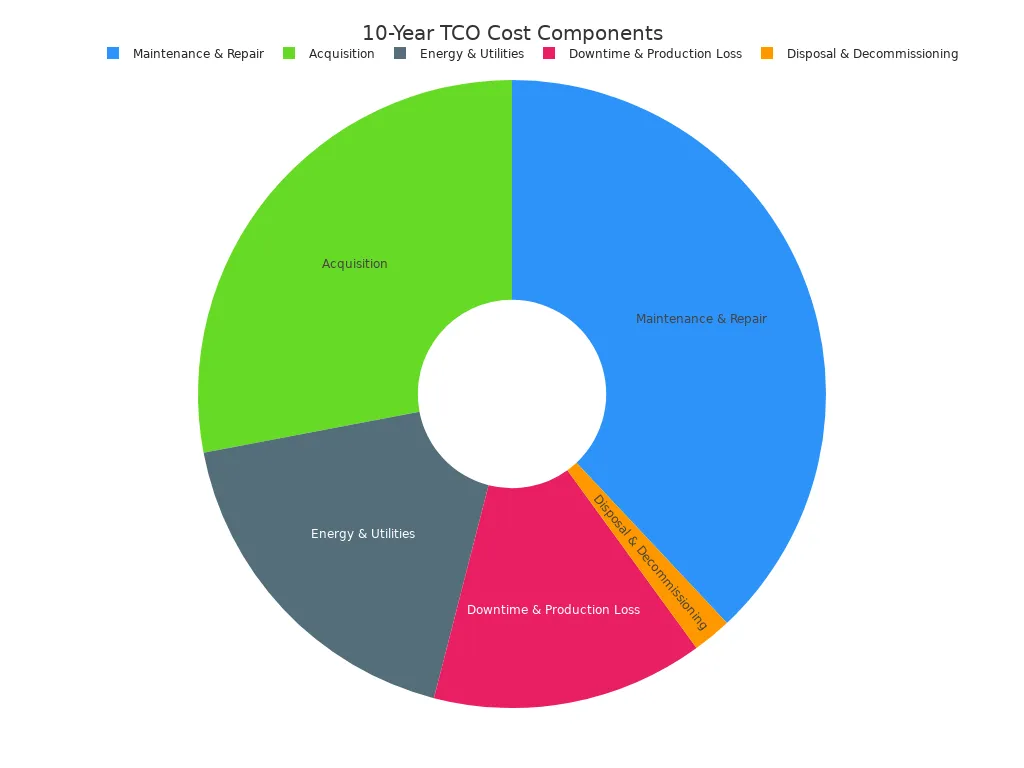
You calculate the total cost of ownership (TCO) by evaluating every expense over the lifespan of your machine. The initial equipment acquisition represents less than one-third of your full expenditure over a ten-year operational period.
Cost Component | Typical Percentage of TCO (10-year) |
|---|---|
Acquisition | 28% |
Maintenance & Repair | 38% |
Energy & Utilities | 18% |
Downtime & Production Loss | 14% |
Disposal & Decommissioning | 2% |
Maintenance and unexpected repairs consume the largest share of your long-term budget. You must account for recurring preventive maintenance, such as $20–$50 per month for lubrication and $10–$20 per month for basic cleaning supplies. Expect replacement wear parts to cost 1–3% of the machine's purchase price annually.
Analyzing Operating Costs and Scrap Reduction
Daily operating costs depend heavily on fluid consumables and specialized tooling accessories. Budgeting $100–$500 per year for coolant and $50–$200 per year for filters keeps your fluid systems running cleanly. Your initial tooling package costs between $500–$5,000+, while secure workholding equipment like specialized vises adds $200–$1,000+. Essential measurement and inspection tools require an additional $200–$600 investment.
Switching from manual operations to precision automated cutting controls slashes daily material waste on your factory floor.
In a production trial at Midland Steel, it reduced the scrap rate from 5% to 2.5% — a 50% reduction. ... upgrading from manual cut planning to algorithm-based optimisation can halve your scrap rate.
Automated cutting parameter adjustments can achieve a scrap reduction of 35-55%. This massive waste reduction directly lowers raw inventory consumption and optimizes overall manufacturing margins.
Vendor Capability and Implementation Strategy
Customization and Engineering Support
You need an experienced equipment manufacturer to ensure long-term production stability. Top vendors construct industrial machinery using high-grade structural materials and strict quality control protocols. Experienced engineering teams evaluate your unique material mix to deliver tailored processing solutions. You can request custom frame dimensions, specialized feeding mechanisms, or custom cutting modes for unusual material profiles. Robust microcomputer numerical control interfaces allow engineers to tailor processing programs directly to your factory workflow. This custom engineering ensures that your system processes complex materials cleanly without physical damage.
You should also mandate factory acceptance testing before final machine delivery. Factory acceptance testing lets your engineering team verify cut accuracy, cycle times, and machine controls directly at the vendor facility. This rigorous testing step eliminates unexpected integration errors before equipment arrives on your shop floor. Qualified technicians test your actual material samples to confirm dimensional tolerances under real operating conditions. Dedicated vendor engineering support guarantees that your specialized machinery adapts seamlessly to future assembly designs and changing material specifications.
Service Level Agreements and Maintenance
Continuous factory operation depends heavily on responsive technical support and immediate spare parts availability. Missing replacement components paralyze active assembly lines and disrupt critical delivery schedules.
Research shows that industries can experience unplanned downtimes of up to 40% due to missing or delayed spare parts.
Partnering with an established vendor protects your manufacturing facility against these expensive operational delays. Leading suppliers maintain comprehensive component inventories to dispatch critical wear items rapidly. Robust spare parts planning keeps your preventive maintenance programs running on schedule.
Clear service level agreements establish predictable maintenance response windows for your maintenance staff. Dedicated technical support teams help your operators troubleshoot complex mechanical issues or software configurations quickly.
Jingwen maintains service response capabilities across major global markets with a dedicated international service team that can respond to most service requests within 24 hours.
Selecting a high-quality tube cutting machine backed by comprehensive service agreements secures your daily production output. Rapid technical assistance and reliable parts delivery preserve high operational uptime across every shift.
Selecting the ideal tube cutting machine requires a systematic decision-making path. First, you define your physical tubing parameters like outer diameter and wall thickness. Next, you choose matching mechanical processing technology to prevent profile damage. You then evaluate key automation features like bundle loaders to eliminate manual feeding bottlenecks. Finally, you calculate the complete total cost of ownership to protect your operational budget.
You can maximize your plant yield today. Audit your daily material mix across all active assembly lines now. Contact our technical engineering experts to request a personalized consultation for custom-tailored cutting solutions built for your specific manufacturing requirements.
FAQ
How does a microcomputer numerical control system improve tube cutting accuracy?
Microcomputer numerical control systems manage blade velocity, drive torque, and material feeding speeds directly. You program exact cut lengths and target quantities into a digital panel. This digital control eliminates manual measurement errors and maintains tight tolerances across high-volume production runs.
Which machine model handles corrugated tubing with slitting options?
The Hechang HC-605 series processes corrugated tubing from 5 mm to 35 mm in outside diameter. It offers an optional slitting capability for open-slotting needs. You execute longitudinal slitting and length cutting within a single automated pass to boost harness production efficiency.
Why should you choose mechanical cutting over thermal laser methods for polymer tubing?
Thermal lasers generate intense heat that scorches flexible polymers or melts thin sleeves. Mechanical cutting systems use controlled blade shearing with zero thermal output. You achieve clean cut faces on heat shrink and corrugated tubing without thermal distortion or material discoloration.
How does zero-tailing functionality reduce material scrap?
Standard processing leaves unusable pipe remnants inside clamping jaws. Zero-tailing mechanisms pass raw stock through synchronized clamping chucks to cut material down to the final edge. You convert almost all raw stock into usable parts and reduce raw inventory costs significantly.


View More(Total0)Comment lists