


How to choose the right wire taping machine for cable manufacturing
 Nov 03, 2026|
 View:11
Choosing a wire taping machine for cable manufacturing starts with a clear list of selection factors. Cable type and size, tape material, line speed, tension and wrap accuracy, automation level, compliance, and total cost all shape the decision. Treat these factors as requirements first. Match the machine to your cable and production volume, not the reverse. A machine that fits your current output and offers reasonable room for growth will serve you better than one chosen on price or automation alone. This post walks through each factor in order and ends with a practical checklist you can use to score vendors.
Key Takeaways
Define your cable types, tape materials, and production volume first. This step ensures the machine fits your needs.
Check tension control, speed, and automation level. These factors affect wrap quality and daily output.
Match the taping pattern and machine orientation to your cable function. Spiral wrap gives full coverage; spot wrap saves tape.
Verify safety guards, certifications, and warranty terms. These protect your operators and reduce downtime.
Compare total cost, including purchase, operation, and maintenance. A lower price may cost more over time.
Define Requirements for Your Wire Taping Machine
Cable types and volumes
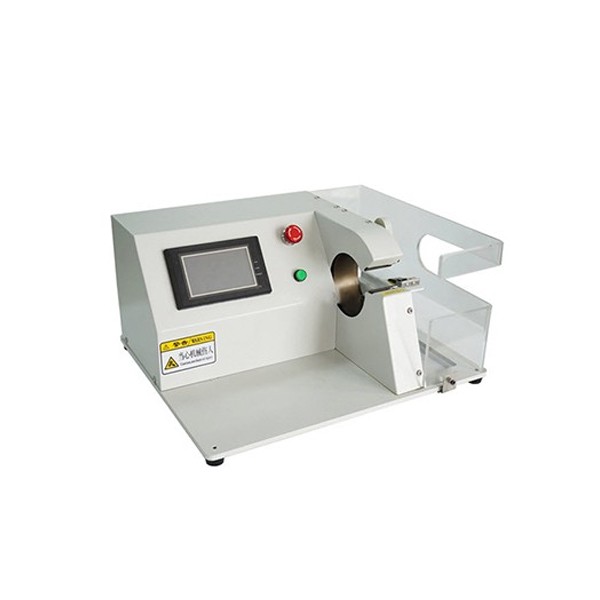
Start with the cable itself. A single conductor, a multi-core cable, and a harness bundle each demand a different machine category. Single conductors often need simple spiral coverage. Multi-core cables may need spot taping at fixed positions. Harness bundles usually call for consistent spiral winding along a longer length. Cable construction also sets the taping pattern. Spot taping suits a fixed point on a bundle. Spiral taping suits continuous coverage. Your wire diameter range narrows the field further. A semi-automatic model such as the Hechang HC-30 supports wire diameters from 1mm to 25mm, and the EW-2765 from ew-wirestripping.com covers 3mm to 25mm. Compare those ranges against your actual production requirements, not against a catalog maximum. A machine rated for a wider range may still suit you well, provided the working range covers your cables with margin.
Production volume decides the automation level. Low-to-medium volumes fit semi-automatic machines, where an operator feeds bundles and the machine handles precise tape placement. Semi-automatic machines keep the operator in the loop for loading and unloading, and they deliver consistent tape placement run after run. High volumes with long runs may justify a fully automated line. Fully automated lines remove the operator from the cycle, and they pay back on long, stable runs. Write down your daily output, your typical cable mix, and your changeover frequency before you talk to any vendor. A clear volume picture keeps the conversation grounded in your plant, not in a brochure.
Tape materials and specs
Tape selection is a specification exercise, not a preference. The Hechang HC-30 accepts PVC, vinyl, cloth, and felt tapes without release paper, with tape widths from 9mm to 30mm and outer diameters up to 110mm. These figures are typical checkpoints for a wire taping machine in this class. Tape width and outer diameter limits define what the machine can hold, and they set the practical boundary for your tape catalog. Wider process windows exist. Equipment from dgqfmachine.com handles mica tape, PTFE, and polyimide for high-temperature work, plus copper foil, aluminum foil, Mylar, cotton paper, and Teflon, with bobbins from Φ300mm to Φ1,250mm. Check the tape core inner diameter as well. The EW-2765 accepts 38mm cores, with 36mm as an option.
Match the tape to the job. A shielding job and an insulation job rarely share the same tape. State the function first, then the material. Gemwellcmc.com lists aluminum and copper foil for shielding, Mylar and polyester for insulation layers, and polytetrafluoroethylene, polyimide, and mica for temperature or fire resistance.
Tape Material | Application |
|---|---|
Aluminum foil | Shielding |
Copper foil | Shielding |
Mylar | Insulation layers |
Polyester | Insulation layers |
Polytetrafluoroethylene | Temperature or fire resistance |
Polyimide | Temperature or fire resistance |
Mica | Temperature or fire resistance |
Tape geometry follows the cable. Gemwellcmc.com notes that tape thickness and overlap ratio depend on the outer diameter of the wire core and the finished wire. Tape width follows the conductor outer diameter, the overlap ratio, and the taping angle. With a known tape width, you select a taping pitch that meets the overlap requirement. A 1/2 overlap, as on the HC-30, gives flat, wrinkle-free coverage. Confirm the tape core inner diameter too. The EW-2765 accepts 38mm cores, with 36mm as an option.
Evaluate Technical Performance
Tension, speed, and accuracy
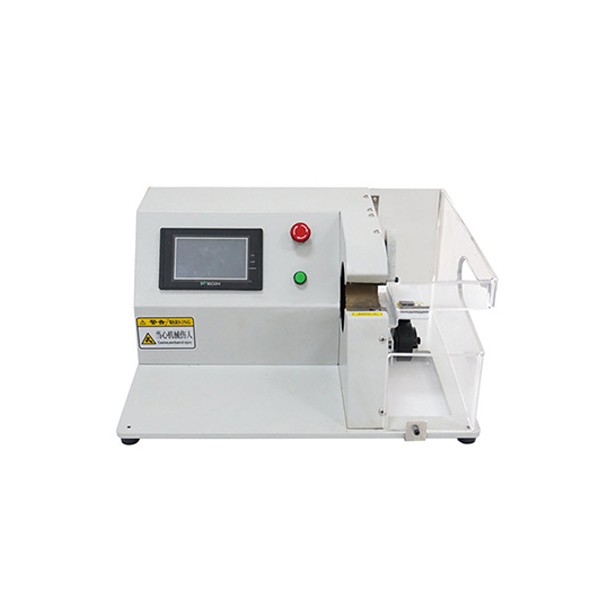
Tension control decides wrap quality. Loose tape wrinkles and slips out of position. Tight tape stretches the insulation or crushes a soft bundle. A good wire taping machine holds steady tension across the full roll, from the first wrap to the last. Check how the machine sets tension. A dial or digital control with a visible scale lets you repeat a setting across shifts. Repeatability matters more than the absolute range. The HC-30 uses spiral winding with a 1/2 overlap, so each turn of cloth tape covers half of the previous circle. That overlap produces flat, wrinkle-free coverage and secure, consistent hold. You can also switch between point winding at the same position and spiral winding at different positions. Point winding suits a fixed tie-off on a harness bundle. Spiral winding suits continuous coverage along a cable run. Confirm both patterns on a sample before you commit. Watch the tape edge as the roll empties. A machine that tracks well at full roll but wanders near the core will cost you rework. Wrap accuracy also depends on the tape path. A short, guided path keeps the tape centered on the cable.
Speed sets throughput, and it must match your lap settings and cable sensitivity. The HC-30 offers adjustable main engine speed from 200 to 1400 RPM. Higher speeds raise output, and they also raise the risk of tape wander on thin or flexible cables. CAM's CT Taping Machine applies a single roll of tape at speeds up to 500 rpm, per CAM. Speed ratings differ by design and tape path, so compare them at your own lap setting rather than at the nameplate maximum. Lap settings and speed work together. A tighter lap needs a slower pass to stay flat. A looser lap tolerates more speed. Run your most sensitive cable at the top of the range first. If the wrap stays flat and the overlap holds, the speed is safe for that cable. Document the speed you validate for each cable family. Operators can then repeat it without guesswork.
Machine | Speed | Winding method |
|---|---|---|
Hechang HC-30 | 200–1400 RPM, adjustable | Spiral with 1/2 overlap; point or spiral |
CAM CT Taping Machine | Up to 500 rpm | Single roll |
Automation and changeover
Automation level changes how your operators spend their time. On a semi-automatic machine, the operator feeds bundles while the machine handles precise tape placement. The HC-30 follows this model. A touch screen interface makes setup intuitive, and an output display lets you monitor production through the shift. A touch screen that stores recipes shortens setup for repeat jobs. Quick-change blades cut downtime when a blade wears or you switch jobs. Fully automated lines remove the operator from the cycle entirely. They fit long, stable runs at high volume. Semi-automatic machines fit mixed cable catalogs and frequent changeovers. Neither approach is better in every plant. Match the automation level to your volume and your cable mix. Count the steps in a changeover: blade swap, tape roll swap, parameter recall. Each step adds minutes across a shift. Ask each vendor to demonstrate a changeover on a cable you actually run. Time that changeover with a stopwatch. The result tells you more about daily output than any brochure figure.
Match Application Fit
Taping patterns
Your taping pattern follows the cable's function. Spot taping applies tape only to specified sections of a harness rather than wrapping the full length, per ew-wirestripping.com. Branch points, connection areas, and localized protection call for this approach. Spiral taping covers the full run and gives continuous protection.
Attribute | Spiral Wrap (50% Overlap) | Spot Wrap (Flag Tape) |
|---|---|---|
Application | Tape spirals at a 45° angle, each turn overlapping half the previous turn | Short wraps at fixed intervals, every 50 to 100 mm |
Coverage | Double-layer coverage across the entire length | Holds bundle shape without full coverage |
Tape consumption | — | Uses 60 to 70% less tape than spiral wrapping |
Protection | Default for most harness zones; required by IPC/WHMA-A-620 Class 2 and Class 3 harnesses | Bundling only — no abrasion or moisture protection |
Customwireassembly.com notes that spot wrap suits low-stress interior runs and temporary holding during assembly. Spiral wrap remains the default for main trunk and branch runs. A half-lap pattern gives nominally double coverage on a uniform section, per wireharnessproduction.com. Confirm which pattern each cable family needs before you specify a wire taping machine.
Line integration
Machine orientation affects fit on your floor. Vertical taping machines suit small-sized cables below 6mm², per htcablemachinery.com. Horizontal taping machines handle both small and large-sized cables. Both structures share stable performance, high wrapping speed, low noise, and energy-saving operation.
Structure | Cable size applicability |
|---|---|
Vertical taping machines | Small-sized cables (below 6mm²) |
Horizontal taping machines | Both small and large-sized cables |
Check integration with your extrusion and take-up lines. Confirm the supported wire cross-section, cutting length, stripping length, and processing accuracy against your production requirements. A machine that fits your line upstream and downstream saves handling time and floor space.
Verify Compliance and Safety
Standards and certifications
Compliance review starts with the standards your customers already require. Cable harness work commonly references IPC/WHMA-A-620 for workmanship classes, so confirm the machine supports the wrap patterns those classes demand. Ask each vendor for quality certifications that cover the equipment build itself. Look for ISO 9001 on the manufacturer's quality system, and check for CE or UL marks where your market requires them. Request the certificate copies, not just a logo on a brochure. Verify that the certificate scope names the machine category you plan to buy.
Voltage configuration belongs in this review. The Hechang HC-30 operates on 220V or 110V, with voltage options available. Confirm the voltage matches your facility supply before the order ships. A mismatch means a transformer or a return, and both cost time. Ask the vendor to state the voltage on the quotation in writing.
Operator safety
Machine guarding protects the people who run the equipment. Check that the tape path and rotating parts sit behind guards that operators cannot bypass during normal loading. Confirm the machine stops cleanly when an operator opens a guard or presses the stop control. Ask for a demonstration of the stop response during your sample run. A machine that coasts after a stop command puts hands near moving parts longer than necessary.
Warranty terms form part of the safety and compliance picture. The HC-30 comes with a 1-year warranty that excludes belts and blades. Read the exclusion list on any quotation. Consumable exclusions are normal, and you should still know which parts fall outside coverage. Confirm the after-sales channel as well. Hechang provides online technical assistance and video support within 24 hours. Fast support shortens downtime when a wire taping machine stops mid-run. Document the support terms next to the warranty so your maintenance team knows whom to call.
Compare Wire Taping Machine Costs
Cost breakdown
Total cost has three parts: purchase, operation, and maintenance. The purchase price is the visible number. Operating cost covers tape consumption, power, and operator time. Maintenance cost covers blades, belts, and service visits. A machine with a lower sticker price can cost more across a year of production. Weigh all three parts before you sign.
Facility fit belongs in the cost picture. The Hechang HC-30 weighs 27kg and ships in a 430x380x260mm package. That compact, space-saving footprint fits a crowded workshop without a floor rebuild. A larger automated line may need more room, more power, and more setup time. Match the footprint to the space you actually have.
Selection checklist
Score each shortlisted vendor against five areas. Under requirements, confirm the wire diameter range, tape width range, and tape materials cover your catalog. Under performance, check tension repeatability, speed at your lap setting, and changeover time. Under application fit, verify the taping pattern and machine orientation suit each cable family. Under compliance, confirm certifications, voltage, guarding, and warranty terms. Under cost, total the purchase, operating, and maintenance figures.
The HC-30 shows how a mid-range semi-automatic option fits small- to large-scale production. It handles wire diameters from 1mm to 25mm and offers adjustable speed from 200 to 1400 RPM. Treat after-sales support as a scoring line. Hechang provides online technical assistance and video support within 24 hours. Fast support protects your uptime.
Semi-automatic machines fit mixed catalogs and frequent changeovers. Automated lines fit long, stable runs at high volume. Vertical structures suit small cables, and horizontal structures cover a wider size range. Each type has a place. Request a sample run on your own cable before you commit. Score the results, then decide.
Work through the factors in order. Define your cable and tape requirements first. Evaluate tension, speed, and automation next. Confirm the taping pattern and line fit after that. Verify compliance and safety, then compare total cost. This sequence keeps each decision grounded in your plant.
The right wire taping machine matches your current needs and leaves reasonable room for growth. The cheapest option and the most automated option both miss that mark when they ignore your cable mix and volume.
Score each shortlisted vendor with the checklist. Request a sample run on your own cable before you buy. The results will tell you which machine earns the order.
FAQ
What wire diameter range should I look for?
Match the range to your actual cables, not to a catalog maximum. The Hechang HC-30 handles wire diameters from 1mm to 25mm. The EW-2765 covers 3mm to 25mm. Check that your smallest and largest cables sit inside the range with margin.
Which tape materials can a wire taping machine handle?
It depends on the model. The HC-30 accepts PVC, vinyl, cloth, and felt tapes without release paper, with widths from 9mm to 30mm and outer diameters up to 110mm. Other machines handle mica, PTFE, polyimide, and foil tapes. State the tape's function first, then confirm the material.
How fast can a wire taping machine run?
Speed depends on design and lap setting. The HC-30 offers adjustable main engine speed from 200 to 1400 RPM. The CAM CT Taping Machine applies a single roll at speeds up to 500 rpm. Validate speed on your most sensitive cable before you set a production rate.
Should I choose spot taping or spiral taping?
Choose by function. Spiral wrap with 50% overlap gives double-layer coverage and suits main trunk and branch runs. Spot wrap holds bundle shape at fixed intervals and uses 60 to 70% less tape. Spot wrap offers no abrasion or moisture protection, so reserve it for low-stress interior runs.
What warranty and support should I confirm?
Read the warranty terms and the exclusion list. The HC-30 carries a 1-year warranty that excludes belts and blades. Confirm the support channel too. Hechang provides online technical assistance and video support within 24 hours. Fast support shortens downtime when a machine stops mid-run.


View More(Total0)Comment lists